
Triathlon · Level 1: Beginner · Sub-level 1.1
Triathlon Basics
10 tests · 100 facts · updated 12 October 2026 · markdown
Everything a first-time triathlete needs before their first start line: the sport itself, its distances, how a race runs, each leg, transitions, kit, rules and training.
Each test below is ten questions on Insporta. The list under a test is what the questions check: one fact per question, with the source it was written from. Read it before the test, or come back from a wrong answer.
Test 1What Triathlon IsTake a test
Standard triathlon is raced swim first, then the bike, then the run. Swimming is placed first mainly for safety reasons.
Source: World Triathlon / general reference
The San Diego Track Club staged a swim-bike-run event at Mission Bay, California in September 1974, widely regarded as the first modern triathlon.
Source: World Triathlon / general reference
A duathlon is run, bike, run, with no swimming at all. Aquathlon (swim and run, often raced run-swim-run) and aquabike (swim then bike) both include a swim.
Source: World Triathlon / general reference
An aquathlon combines swimming and running. The World Triathlon standard format is run-swim-run, though many races are simply a swim followed by a run. Swimming plus cycling is an aquabike, and running plus cycling is a duathlon.
Source: World Triathlon / general reference
The inaugural Ironman was held on the Hawaiian island of Oahu in February 1978, with fifteen starters and twelve finishers.
Source: World Triathlon / general reference
Ironman combined the Waikiki Roughwater Swim, the Around-Oahu bike race and the Honolulu Marathon into one continuous event.
Source: World Triathlon / general reference
Triathlon made its Olympic debut in Sydney in 2000, with the women's race held first, followed by the men's.
Source: World Triathlon / general reference
The federation was founded as the International Triathlon Union in 1989 and adopted the name World Triathlon in 2020.
Source: World Triathlon / general reference
Ironman is a privately owned race series operated by the World Triathlon Corporation, now trading as The Ironman Group, while World Triathlon is the sport's international federation.
Source: World Triathlon / general reference
In an individual triathlon a single athlete completes the swim, the bike and the run as one continuous effort.
Source: World Triathlon / general reference
Test 2Race Distances and FormatsTake a test
The sprint distance is exactly half the Olympic distance: 750 m swimming, 20 km cycling and a 5 km run.
Source: World Triathlon / general reference
Olympic (standard) distance is 1.5 km of swimming, 40 km on the bike and a 10 km run, and it is the format raced at the Games.
Source: World Triathlon / general reference
1.2 + 56 + 13.1 miles adds up to 70.3 miles, which is why the half-distance race carries that name.
Source: World Triathlon / general reference
Middle distance is 1.9 km of swimming and 90 km of cycling, followed by a half-marathon run.
Source: World Triathlon / general reference
The middle-distance run is a full half marathon, 21.1 km or 13.1 miles.
Source: World Triathlon / general reference
The full distance is a 3.8 km swim, a 180 km ride and a marathon run of 42.2 km, roughly 140.6 miles in total.
Source: World Triathlon / general reference
The Ironman run is a full marathon, 42.195 km or 26.2 miles, completed after the swim and the bike.
Source: World Triathlon / general reference
The standard ladder of distances runs super-sprint, sprint, Olympic (standard), middle and full.
Source: World Triathlon / general reference
Super-sprint is the shortest common format, around 400 m swimming, 10 km cycling and a 2.5 km run, and it is often used as a first race.
Source: World Triathlon / general reference
The mixed team relay uses teams of two women and two men, and each athlete covers a complete short swim, bike and run leg before tagging the next.
Source: World Triathlon / general reference
Test 3Race Structure and TimingTake a test
Mats read the timing chip as you cross them, which is how a result sheet can show separate swim, T1, bike, T2 and run times.
Source: General triathlon racing reference
DNF marks an athlete who started but did not reach the finish, whether through withdrawal or a missed cut-off. An athlete removed for a rules breach is recorded separately as DSQ (disqualified), not DNF.
Source: General triathlon racing reference
Safety governs the swim: cold water, storms, strong currents or contamination can all force a shortened swim or a switch to a duathlon format.
Source: General triathlon racing reference
The swim is the leg where exhaustion carries the greatest risk, so it is held while athletes are fresh and rescue crews are watching a compact field.
Source: World Triathlon / general reference
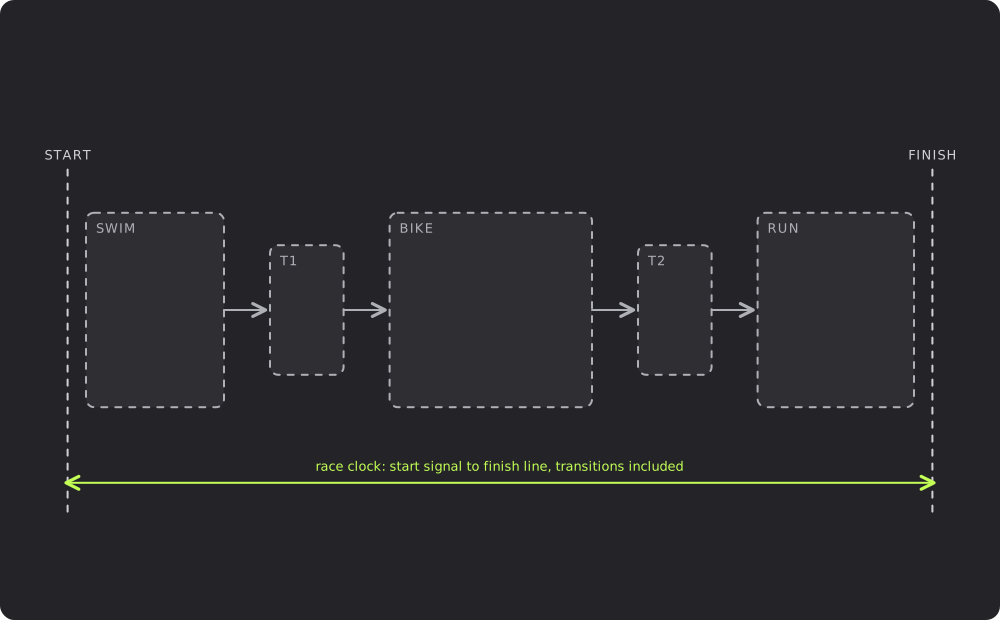
The clock runs continuously from your start (the gun for a wave start, your timing-mat crossing in a rolling start) until the finish line, so time spent in T1 and T2 counts towards the official result.
Source: World Triathlon / general reference
Timing begins at the start signal, so all pre-race admin happens before the clock starts, while both transitions are inside it.
Source: World Triathlon / general reference
Wave starts split the field into smaller groups released a few minutes apart, which reduces crowding and contact in the water.
Source: World Triathlon / general reference
A rolling start feeds athletes in continuously from a self-seeded queue, and each person's clock begins as they cross the timing mat.
Source: Ironman / general reference
Cut-offs apply to individual legs and to the overall race, and missing one means the athlete is stopped rather than allowed to continue.
Source: World Triathlon / general reference
Separating the elite wave keeps the professional race clean to judge and score, and age-group results are ranked within their own categories.
Source: World Triathlon / general reference
Test 4Swim Leg BasicsTake a test
Pool-based races, common for beginners, run the swim in lanes with staggered entries instead of a mass open-water start.
Source: General reference
The neoprene insulates against cold water and lifts the legs and hips, which makes swimming both safer and slightly faster for most athletes.
Source: General reference
Ironman age-groupers may wear a wetsuit up to and including 24.5°C and still be scored normally. Between 24.6°C and 28.8°C a wetsuit may be allowed at the organiser's discretion, but only in a non-competitive wave with no awards. Wetsuits are mandatory below 16°C, and professionals have a lower limit of 21.9°C.
Source: Ironman competition rules
Wetsuits trap body heat, so above a set temperature they become a heat-illness hazard rather than protection.
Source: World Triathlon / Ironman competition rules
Without lane lines, swimmers must glance forward periodically to stay on course, since drifting off line adds distance.
Source: General reference
Unlike the bike leg in non-drafting races, swimming in another athlete's wake is permitted and is a normal part of race tactics.
Source: World Triathlon competition rules
The back and outside edges are the least congested part of a mass start, which reduces the chance of being kicked or swum over.
Source: General reference
Triathlon rules leave the stroke to the athlete, and most swim front crawl because it is the fastest and most efficient option.
Source: World Triathlon competition rules
Bright, wave-specific cap colours let marshals track who is in the water and which group each swimmer belongs to.
Source: General reference
Cutting inside a turn buoy shortens the course and can lead to a penalty, so athletes must round it on the briefed side.
Source: World Triathlon competition rules
Test 5Bike Leg BasicsTake a test
Drafting means following closely enough to benefit from the reduced air resistance behind another rider, which saves significant energy.
Source: World Triathlon / general reference
Most age-group racing is 'non-draft-legal': riders must keep a legal distance and drafting earns a time penalty or disqualification.
Source: World Triathlon / Ironman rules, general reference
Draft-legal racing is mainly used at elite/junior short-course level, including the World Triathlon series and the Olympics; most other formats are non-draft.
Source: World Triathlon / general reference
The draft zone is a defined zone extending behind each bike. You must stay out of it except where the rules allow: while completing an overtake within the permitted time, for safety reasons, near an aid station or transition, at an acute turn, or on a course section the officials have exempted. Its exact size differs between federations and race distances.
Source: World Triathlon / Ironman rules, general reference
Once you are passed you must fall back clear of the passing rider's draft zone; sitting on their wheel is a drafting penalty even though you did not initiate the pass.
Source: World Triathlon / Ironman rules, general reference
Cadence is simply how fast you are turning the pedals, measured in revolutions per minute, and it is independent of which gear you are in.
Source: General cycling reference
Shifting under heavy load strains the drivetrain and can drop the chain, so the change is made while the pedals are still turning easily.
Source: General cycling reference
Triathlon is an individual event: you carry your own tools and spares and normally fix the bike yourself. Help from spectators, friends or family is prohibited outside assistance. Race officials and official neutral support may give limited mechanical help, and fellow competitors may lend incidental items such as a pump or an inner tube.
Source: World Triathlon / Ironman rules, general reference
That is 'blocking': riders must keep to the correct side of the lane and leave the passing side free unless they are actively overtaking.
Source: World Triathlon / Ironman rules, general reference
Time-trial and triathlon bikes are built around aero bars and a forward riding position to cut air resistance; road bikes use drop bars and a more upright fit.
Source: General cycling reference
Test 6Run Leg BasicsTake a test
Absorption takes time, so drinking in the closing minutes rarely helps; taking fluid steadily from the first aid stations does.
Source: General triathlon racing reference
Cycling and running load the legs differently, so there is a short neuromuscular adjustment before your normal run feel returns.
Source: General triathlon training reference
Legs and breathing take a few minutes to adapt off the bike, so a controlled start avoids blowing up later in the run.
Source: General triathlon training reference
A negative split means the second half is quicker, which usually indicates the opening pace was well judged.
Source: General running reference
Run numbers must face forward so finish-line officials and cameras can identify you; many athletes use a race belt they can spin round in transition.
Source: World Triathlon / Ironman rules, general reference
Headphones are prohibited because athletes must be able to hear marshals, traffic and other competitors; wearing them risks disqualification.
Source: World Triathlon / Ironman rules, general reference
Slowing and stepping out of the running line lets you take the drink cleanly without cutting across other athletes or the volunteers.
Source: General triathlon racing reference
Staying tall and relaxed lets you breathe freely and land more efficiently; bending at the waist and over-striding both waste energy.
Source: General running reference
Accompanying runners count as outside assistance and are not allowed; walking, stopping or using your own nutrition are all fine.
Source: World Triathlon / Ironman rules, general reference
The chute stays clear when athletes keep running through and beyond the line; stopping or blocking it interferes with other finishers and the timing.
Source: General triathlon racing reference
Test 7Transitions T1 and T2Take a test
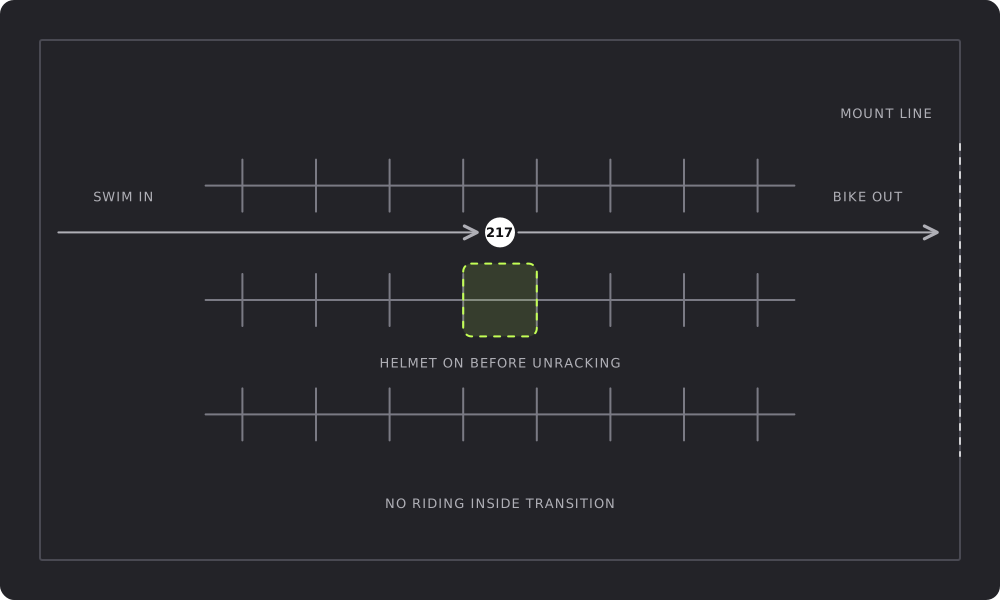
T1 is the first transition, where athletes move from the swim leg onto the bike leg.
Source: World Triathlon / general reference
The race clock never stops in transition, so seconds lost there cost exactly the same as seconds lost on any of the three legs.
Source: World Triathlon / general reference
The helmet must be fastened from the moment you take the bike off the rack until after you have put it back. In practice, fasten it before you touch the bike at all.
Source: World Triathlon / general reference
Riding is not allowed inside the transition area, so the mount line marks where you may first get on the bike.
Source: World Triathlon / general reference
Riding inside transition is prohibited, so the bike is run alongside the athlete until the mount line.
Source: World Triathlon / general reference
Elastic laces let you slip the shoe straight on, removing the fiddly job of tying wet laces under fatigue.
Source: World Triathlon / general reference
Each athlete has a numbered space; using someone else's disrupts them and is a rules infringement in most races.
Source: World Triathlon / general reference
Both feet must be on the ground before the line, so slow well before it rather than at it. Riding past the line is penalised, and how severely depends on the event, so check your athlete guide.
Source: General triathlon reference
The wetsuit comes off in T1 after the swim; T2 is the bike-to-run change.
Source: World Triathlon / general reference
In a flying mount the shoes stay attached to the pedals and the athlete jumps on and slips into them while rolling, an advanced skill best left until basic transitions are solid.
Source: World Triathlon / general reference
Test 8Essential EquipmentTake a test
A trisuit is a single garment that swims, rides and runs, so no clothing change is needed in transition.
Source: World Triathlon / general reference
Punctures are by far the most common race-day mechanical, so the standard kit is a tube or patches, levers and a pump or gas canister.
Source: General cycling reference
Races require a helmet certified to an approved safety standard and in sound condition; the aero shape is optional.
Source: World Triathlon / general reference
Beginner races welcome road, hybrid and mountain bikes; what matters is that the bike is safe and working, not its category.
Source: World Triathlon / general reference
An elastic belt lets you clip on the number and spin it from back to front between the bike and run legs.
Source: World Triathlon / general reference
The helmet is a universal requirement; the computer and cycling shoes are optional, and wetsuits depend on water temperature rules.
Source: World Triathlon / general reference
Being attached to the pedal gives a more efficient, connected pedal stroke; beginners can still ride perfectly well in running shoes.
Source: World Triathlon / general reference
Outside assistance from supporters is not allowed; nutrition must be carried on you or on the bike.
Source: World Triathlon / general reference
Timing chips are worn on an ankle strap so they read reliably as the athlete crosses the timing mats on foot and on the bike.
Source: World Triathlon / general reference
Outdoor swims often face into low sun, and tinted or mirrored lenses reduce glare so you can sight the buoys.
Source: World Triathlon / general reference
Test 9Race Rules and PenaltiesTake a test
Help from spectators or non-participants is outside assistance and is not allowed; aid stations, race officials and your own supplies are fine.
Source: World Triathlon Competition Rules / general reference
Unsporting behaviour such as abusing officials is treated as a serious offence and is sanctioned with disqualification, shown by a red card.
Source: World Triathlon Competition Rules / general reference
Under World Triathlon rules the blue card signals a time penalty, most often for drafting, which the athlete must serve in the penalty box.
Source: World Triathlon Competition Rules / general reference
The yellow card is how a Technical Official notifies an athlete of a time penalty for a non-drafting infringement. Drafting penalties are signalled with a blue card and disqualification with a red card. A plain warning is given by whistle, without any card.
Source: World Triathlon Competition Rules / general reference
The penalty box is where time penalties are served during the race; ignoring it means the penalty is unserved and the athlete is disqualified.
Source: World Triathlon Competition Rules / general reference
Courses have marked litter zones, usually at or just after aid stations; dropping rubbish outside them is a penalised littering offence.
Source: World Triathlon Competition Rules / general reference
Triathlon puts the responsibility on the competitor: going off course or breaking a rule you did not read is still your mistake.
Source: World Triathlon Competition Rules / general reference
Aid stations are provided by the organiser, so using them is normal racing; cutting the course, riding without a helmet and abusing officials are all disqualification offences.
Source: World Triathlon Competition Rules / general reference
An athlete who leaves the course must rejoin it at the point of departure, so no part of the distance is skipped; otherwise it counts as course-cutting.
Source: World Triathlon Competition Rules / general reference
World Triathlon forbids nudity and indecent exposure, sanctioned by a warning to amend or by disqualification. Kit, including a wetsuit, may be changed at your own transition spot as long as the torso stays covered; where an organiser provides a changing tent, use it.
Source: World Triathlon Competition Rules / general reference
Test 10Getting Started and TrainingTake a test
Bricks join two disciplines with no real break so the body learns to cope with the switch, especially the heavy-legged feeling of running off the bike.
Source: General coaching reference
Base training is about steady aerobic volume built up gradually; maximal intervals belong to later, sharper phases of the plan.
Source: General coaching reference
Regular exposure to all three disciplines each week maintains skill and fitness in each; long gaps, especially from swimming, cost technique quickly.
Source: General coaching reference
Training provides the stimulus, but the adaptation happens while you recover; skipping rest leads to stagnation, illness and injury.
Source: General coaching reference
Without lane lines, walls or a black line to follow, you must sight to swim straight, and cold water plus a wetsuit feel very different from a pool.
Source: General coaching reference
Sprint is the most common first-race choice: short enough to reach on modest training while still teaching the full swim-bike-run and transitions. Some athletes start with an even shorter super-sprint.
Source: General coaching reference
A taper sheds accumulated fatigue by reducing volume, while short sharper efforts keep you feeling snappy rather than flat on race day.
Source: General coaching reference
Going out too fast is the classic beginner swim mistake; a controlled start keeps breathing under control and costs very little overall time.
Source: General coaching reference
Connective tissue adapts more slowly than the heart and lungs, so volume is raised in small steps with regular easier weeks to absorb the work.
Source: General coaching reference
Nothing new on race day: rehearsing your nutrition in training shows what your stomach tolerates at race effort and avoids surprises.
Source: General coaching reference
Sources
World Triathlon Competition Rules / Ironman competition rules / general coaching reference
- World Triathlon / general reference46
- World Triathlon Competition Rules / general reference10
- General coaching reference10
- World Triathlon / Ironman rules, general reference8
- General triathlon racing reference6
- General reference5
- General cycling reference4
- World Triathlon competition rules3
- General triathlon training reference2
- General running reference2
- Ironman / general reference1
- Ironman competition rules1
- World Triathlon / Ironman competition rules1
- General triathlon reference1