
Cricket · Level 1: Beginner · Sub-level 1.2
Ways of Getting Out
10 tests · 100 facts · updated 12 October 2026 · markdown
This sub-level teaches the ways a batter can be dismissed — bowled and caught as the everyday ones, LBW explained as three plain questions, run out and stumped, hit wicket, and the rare modes; that the fielding side must appeal before an umpire can give anyone out, that the umpire decides, and what happens once a wicket has fallen. It also covers the finer points of a catch, which wickets go to the bowler and which only to the team, how a dismissal is written on a scorecard, and how to tell which batter is run out.
Each test below is ten questions on Insporta. The list under a test is what the questions check: one fact per question, with the source it was written from. Read it before the test, or come back from a wrong answer.
Test 1Bowled and caughtTake a test
Bowled means the delivery hits the wicket and dislodges a bail; a near miss or a take by the keeper is not it.
Source: MCC Laws of Cricket 2017 code (3rd edition 2022), Law 32 · recall
Bowled still counts when the ball deflects off the bat or body on its way to the stumps.
Source: MCC Laws of Cricket 2017 code (3rd edition 2022), Law 32 · applied
Only contact with the bat, or a glove on the hand holding it, allows a catch; the ball must not have hit the ground.
Source: MCC Laws of Cricket 2017 code (3rd edition 2022), Law 33 · recall
A fielder in contact with the ball must not touch the boundary; if he does, the hit is six, not a catch.
Source: MCC Laws of Cricket 2017 code (3rd edition 2022), Law 19 · applied
A catch by the keeper is still "caught" and still the bowler's wicket, noted as "caught behind".
Source: General scoring convention · recall
A fair catch needs the ball not to have touched the ground; a "bump ball" that bounces first is not out.
Source: MCC Laws of Cricket 2017 code (3rd edition 2022), Law 33 · applied
Caught is the single commonest mode of dismissal, with bowled and lbw following behind, so caught and bowled together take the large majority.
Source: ESPNcricinfo · recall
The one thing that matters on a low catch is "carry" — whether the ball reached the hands before the ground.
Source: MCC Laws of Cricket 2017 code (3rd edition 2022), Law 33 · applied
Law 32.2 says the striker is out Bowled even if another dismissal would also be justified, and Law 33.5 gives Caught the next precedence; so when several modes apply, Bowled is the one recorded.
Source: MCC Laws of Cricket 2017 code (3rd edition 2022), Law 32 · recall
Leaving the ball changes nothing; if the delivery removes a bail, the batter is bowled.
Source: MCC Laws of Cricket 2017 code (3rd edition 2022), Law 32 · applied
Test 2LBW in plain termsTake a test
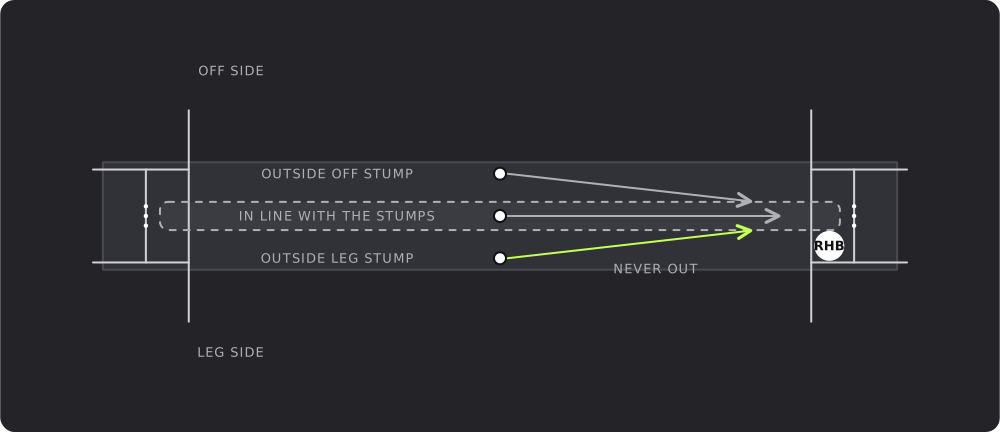
Leg before wicket: the batter's leg or body has stopped a ball that was going on to hit the stumps.
Source: MCC Laws of Cricket 2017 code (3rd edition 2022), Law 36 · recall
Pitching, the point of impact and the projected path to the stumps are the three things the umpire weighs.
Source: MCC Laws of Cricket 2017 code (3rd edition 2022), Law 36 · recall
A delivery that lands outside leg stump can never bring an LBW, wherever it then strikes the batter.
Source: MCC Laws of Cricket 2017 code (3rd edition 2022), Law 36 · applied
Impact outside off stump is out only when the batter offered no stroke; otherwise he is not out.
Source: MCC Laws of Cricket 2017 code (3rd edition 2022), Law 36 · applied
If the ball touches the bat before the pad, LBW cannot be given, whatever the ball would have done next.
Source: MCC Laws of Cricket 2017 code (3rd edition 2022), Law 36 · applied
Even with legal pitching and impact, a ball shown to be clearing the stumps is not an LBW.
Source: MCC Laws of Cricket 2017 code (3rd edition 2022), Law 36 · applied
Pitched in line, struck in line, no shot offered, and hitting the stumps: a straightforward LBW.
Source: MCC Laws of Cricket 2017 code (3rd edition 2022), Law 36 · applied
Without LBW a batter could simply block every straight ball with the legs; the Law makes that a dismissal.
Source: MCC Laws of Cricket 2017 code (3rd edition 2022), Law 36 · recall
The further from the stumps the impact, the less certain the projection, so a well-forward strike is doubted.
Source: MCC Laws of Cricket 2017 code (3rd edition 2022), Law 36 · applied
Where the Decision Review System is in use, a player review lets ball-tracking check the projected path.
Source: ICC Playing Conditions (Decision Review System) · applied
Test 3Run out and stumpedTake a test
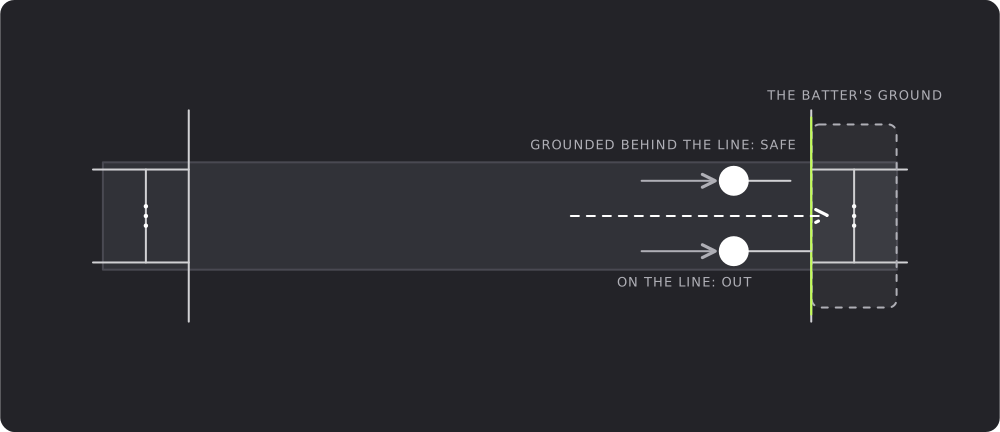
A run out turns on the batter being out of his ground, that is not behind the crease line, when the wicket is put down.
Source: MCC Laws of Cricket 2017 code (3rd edition 2022), Law 38 · recall
The thrown ball may break the wicket on its own, so a direct hit is a valid run out.
Source: MCC Laws of Cricket 2017 code (3rd edition 2022), Law 38 · applied
Run out is not credited to any bowler, so the bowler's figures do not change.
Source: General scoring convention · recall
Only one batter can be safe in a ground; whoever belongs to the broken, empty end is the one run out.
Source: MCC Laws of Cricket 2017 code (3rd edition 2022), Law 38 · applied
A stumping is the keeper putting the wicket down with the striker out of his ground and not running.
Source: MCC Laws of Cricket 2017 code (3rd edition 2022), Law 39 · recall
Beaten and out of his ground with no run attempted, and the keeper doing it: that is a stumping.
Source: MCC Laws of Cricket 2017 code (3rd edition 2022), Law 39 · applied
Once the batter is trying to run, the same act is a run out rather than a stumping, and any fielder may do it.
Source: MCC Laws of Cricket 2017 code (3rd edition 2022), Law 39 · applied
A stumping counts as the bowler's wicket; a run out is credited to no bowler.
Source: General scoring convention · recall
Once bat or body has been grounded behind the line, a moment of lifting it to turn does not put the batter out.
Source: MCC Laws of Cricket 2017 code (3rd edition 2022), Law 30 · applied
Both need the batter out of his ground when the wicket is put down; every other detail differs.
Source: MCC Laws of Cricket 2017 code (3rd edition 2022), Laws 38 and 39 · recall
Test 4Hit wicket, and the rare ways outTake a test
Hit wicket covers the striker dislodging a bail with bat, pad, body or kit while playing or starting to run.
Source: MCC Laws of Cricket 2017 code (3rd edition 2022), Law 35 · recall
Breaking the wicket with the bat while playing the shot is hit wicket; the path of the ball is beside the point.
Source: MCC Laws of Cricket 2017 code (3rd edition 2022), Law 35 · applied
Obstructing the field is a deliberate act by the batter, in word or action, to hinder the fielding side.
Source: MCC Laws of Cricket 2017 code (3rd edition 2022), Law 37 · recall
Deliberately getting in the way of a fielder's attempt to run him out is obstructing the field.
Source: MCC Laws of Cricket 2017 code (3rd edition 2022), Law 37 · applied
An incoming batter must be ready to take strike within the set time, or he can be given timed out.
Source: MCC Laws of Cricket 2017 code (3rd edition 2022), Law 40 · recall
A deliberate second strike is permitted solely to protect the wicket, never to make runs.
Source: MCC Laws of Cricket 2017 code (3rd edition 2022), Law 34 · recall
Interfering with the fielding side's attempt to field the ball is obstructing the field, however desperate.
Source: MCC Laws of Cricket 2017 code (3rd edition 2022), Law 37 · applied
Caught is far and away the commonest; timed out and hit the ball twice are extreme rarities.
Source: ESPNcricinfo · recall
Timed out is a genuine mode of dismissal that is simply applied very seldom.
Source: ESPNcricinfo · applied
Bowled, caught and LBW arise from everyday play; the rare modes need an unusual act or a long delay.
Source: ESPNcricinfo · recall
Test 5The appealTake a test
"No appeal, no wicket": the umpire rules on a dismissal only when the fielding side asks.
Source: MCC Laws of Cricket 2017 code (3rd edition 2022), Law 31 · recall
"How's that?", often shortened to "Howzat", is the recognised form of an appeal to the umpire.
Source: MCC Laws of Cricket 2017 code (3rd edition 2022), Law 31 · recall
With no bail removed there is no bowled dismissal, and with no appeal the umpire would not give one anyway.
Source: MCC Laws of Cricket 2017 code (3rd edition 2022), Law 31 · applied
The appeal must come before the next delivery's run-up, or before "time" if it is the last ball.
Source: MCC Laws of Cricket 2017 code (3rd edition 2022), Law 31 · recall
An umpire in doubt on a point the other umpire may have seen better consults him before giving the decision; only if doubt remains after that is the answer not out.
Source: MCC Laws of Cricket 2017 code (3rd edition 2022), Law 31 · applied
A batter who is genuinely dismissed may leave the field without an appeal or an umpire's decision.
Source: MCC Laws of Cricket 2017 code (3rd edition 2022), Law 31 · applied
An appeal can be withdrawn with the umpire's permission, provided the batter has not yet left the wicket.
Source: MCC Laws of Cricket 2017 code (3rd edition 2022), Law 31 · recall
One appeal invites the umpire to rule on any mode of dismissal that might apply to that delivery.
Source: MCC Laws of Cricket 2017 code (3rd edition 2022), Law 31 · applied
The Decision Review System lets each side refer a set number of decisions to the television umpire.
Source: ICC Playing Conditions (Decision Review System) · recall
DRS is an ICC playing-conditions feature for top-level cricket; the Laws themselves do not include it.
Source: ICC Playing Conditions (Decision Review System) · recall
Test 6When a wicket fallsTake a test
The ball becomes dead as soon as a batter is dismissed, so nothing else can happen on that delivery.
Source: MCC Laws of Cricket 2017 code (3rd edition 2022), Law 20 · recall
A run out is not the bowler's wicket, so his figures record the runs but no dismissal.
Source: General scoring convention · applied
The time allowed is short, and failing to be ready in it can bring a timed-out dismissal.
Source: MCC Laws of Cricket 2017 code (3rd edition 2022), Law 40 · recall
A wicket does not reset the over; the same bowler completes the remaining balls once play resumes.
Source: MCC Laws of Cricket 2017 code (3rd edition 2022), Law 17 · applied
Since the 2022 edition, Law 18.11 sends the not-out batter back to his original end after a Caught dismissal, so the new batter takes strike unless the catch ended the over.
Source: MCC Laws of Cricket 2017 code (3rd edition 2022), Law 25 · applied
Catches account for the largest share of dismissals in every format of the game.
Source: ESPNcricinfo · recall
A no-ball rules out bowled, caught, LBW, stumped and hit wicket; run out and a few others remain possible.
Source: MCC Laws of Cricket 2017 code (3rd edition 2022), Law 21 · applied
A dismissed batter keeps every run he made; the card records his score, how he was out, and off which bowler.
Source: General scoring convention · recall
Run outs and similar modes take wickets without ever showing up in a bowler's figures.
Source: General scoring convention · applied
Timed out, obstructing the field and hit the ball twice each require something out of the ordinary to happen.
Source: ESPNcricinfo · recall
Test 7Caught: the fine printTake a test
A catch is still fair if the ball has touched an umpire, another fielder or the other batter on the way.
Source: MCC Laws of Cricket 2017 code (3rd edition 2022), Law 33 · applied
A catch needs the ball to have come off the bat or the glove on the bat hand; off the pad alone it cannot be caught.
Source: MCC Laws of Cricket 2017 code (3rd edition 2022), Law 33 · applied
Off a no-ball a batter cannot be bowled, caught, LBW, stumped or out hit wicket.
Source: MCC Laws of Cricket 2017 code (3rd edition 2022), Law 21 · applied
A catch is complete from the moment the fielder has complete control over both the ball and his own movement.
Source: MCC Laws of Cricket 2017 code (3rd edition 2022), Law 33 · recall
A catch may come off another fielder before it is held; the fielder who completes it is the one credited.
Source: MCC Laws of Cricket 2017 code (3rd edition 2022), Law 33 · applied
A ball may be juggled between fielders; the catch stands as long as it never touches the ground or the ground beyond the boundary.
Source: MCC Laws of Cricket 2017 code (3rd edition 2022), Law 33 · applied
Only a bounce after the ball leaves the bat spoils a catch; the bowler's delivery is meant to pitch.
Source: MCC Laws of Cricket 2017 code (3rd edition 2022), Law 33 · applied
In international cricket the on-field umpires may refer a fair-catch question to the third umpire, who studies the replays.
Source: ICC Men's Test Match Playing Conditions · applied
Off the bat first and then the pad, the ball can still be caught: it has been hit by the bat.
Source: MCC Laws of Cricket 2017 code (3rd edition 2022), Law 33 · applied
Since 2017 a catch is fair even if the ball has hit a helmet worn by a fielder; gully completed it, so he is credited.
Source: MCC Laws of Cricket 2017 code (3rd edition 2022), Law 33 · applied
Test 8The bowler's wickets and the team'sTake a test
Bowled, caught, LBW, stumped and hit wicket go to the bowler; the other modes are wickets for the team only.
Source: General scoring convention · recall
Timed out is a team wicket: no delivery had anything to do with it.
Source: General scoring convention · applied
A batter may be stumped off a wide, and a stumping is always a wicket for the bowler.
Source: MCC Laws of Cricket 2017 code (3rd edition 2022), Law 39 · applied
The two run outs are team wickets, so the bowlers share the other eight.
Source: General scoring convention · applied
A run out comes from the fielding side's work after the delivery, so it is not part of the bowler's figures.
Source: General scoring convention · recall
A batter who retires for a reason other than injury or illness and does not resume with the opposing captain's consent is retired out.
Source: MCC Laws of Cricket 2017 code (3rd edition 2022), Law 25 · applied
A stumping is written 'st (keeper) b (bowler)': the keeper is named and the wicket is the bowler's.
Source: General scoring convention · applied
Every mode listed counts except the run outs: four, three, two and one wickets.
Source: General scoring convention · applied
A batter who retires through injury may resume his innings at the fall of a wicket or the retirement of another batter.
Source: MCC Laws of Cricket 2017 code (3rd edition 2022), Law 25 · applied
Ward is the bowler in 'c Hill b Ward' and 'lbw b Ward'; the run out is a team wicket and the stumping is Ali's.
Source: General scoring convention · applied
Test 9Reading dismissals on a scorecardTake a test
A bare 'b' followed by a name means bowled by that bowler.
Source: General scoring convention · recall
The name after 'c' is the catcher and the name after 'b' is the bowler.
Source: General scoring convention · recall
'c & b' is caught and bowled: the bowler took the catch himself.
Source: General scoring convention · recall
Hit wicket is written with the bowler's name, since the wicket is credited to him.
Source: General scoring convention · recall
No bowler is named for a run out; the fielders who effected it are shown in brackets.
Source: General scoring convention · recall
Scorecards mark the wicket-keeper with a dagger and the captain with (c) or an asterisk.
Source: General scoring convention · recall
An LBW goes down with the bowler named, because he gets the credit for that dismissal.
Source: General scoring convention · recall
A dismissal line gives the mode and fielder first, then the bowler, then the runs.
Source: General scoring convention · applied
The usual card reads R, B, 4s, 6s and SR, with minutes batted sometimes shown after the balls.
Source: General scoring convention · applied
'st' is stumped, which only the wicket-keeper can do: Shaw stumped Patel off Rao.
Source: General scoring convention · applied
Test 10Run outs: who is out, and what countsTake a test
Once the batters have crossed, the ground at each end belongs to the batter running towards it.
Source: MCC Laws of Cricket 2017 code (3rd edition 2022), Law 30 · applied
Until they cross, each batter's ground is still the end he left, so the striker is out at the striker's end.
Source: MCC Laws of Cricket 2017 code (3rd edition 2022), Law 30 · applied
Runs completed before the run out stand; the run being attempted when the wicket fell does not count.
Source: MCC Laws of Cricket 2017 code (3rd edition 2022), Law 18 · applied
A run out can happen off a no-ball, and the one-run penalty for the no-ball still counts.
Source: MCC Laws of Cricket 2017 code (3rd edition 2022), Law 21 · applied
A wide is not dead: the batters may run, and they can be run out while doing so.
Source: MCC Laws of Cricket 2017 code (3rd edition 2022), Law 22 · applied
Any fielder may put the wicket down for a run out, including the bowler and the wicket-keeper.
Source: MCC Laws of Cricket 2017 code (3rd edition 2022), Law 38 · recall
The not-out batter keeps the end he made good, and the new batter takes the vacant end.
Source: MCC Laws of Cricket 2017 code (3rd edition 2022), Law 18 · applied
The completed run stands even though a batter is run out attempting the next one.
Source: MCC Laws of Cricket 2017 code (3rd edition 2022), Law 18 · applied
The batter out is the one whose ground is at the end where the wicket was put down.
Source: MCC Laws of Cricket 2017 code (3rd edition 2022), Law 30 · applied
They have crossed, so the top end is now B's ground: B, nearer it and running towards it, is run out.
Source: MCC Laws of Cricket 2017 code (3rd edition 2022), Law 30 · applied
Sources
MCC Laws of Cricket 2017 code (3rd edition 2022) for the mechanics of play; ICC Playing Conditions for international format and officiating detail, which override the Laws where they differ; ESPNcricinfo and Wisden for history, records and governance. Questions are authored from these sources, not reproduced from them.
- General scoring convention23
- MCC Laws of Cricket 2017 code (3rd edition 2022), Law 3311
- MCC Laws of Cricket 2017 code (3rd edition 2022), Law 369
- MCC Laws of Cricket 2017 code (3rd edition 2022), Law 318
- ESPNcricinfo6
- MCC Laws of Cricket 2017 code (3rd edition 2022), Law 305
- MCC Laws of Cricket 2017 code (3rd edition 2022), Law 324
- MCC Laws of Cricket 2017 code (3rd edition 2022), Law 384
- MCC Laws of Cricket 2017 code (3rd edition 2022), Law 394
- ICC Playing Conditions (Decision Review System)3
- MCC Laws of Cricket 2017 code (3rd edition 2022), Law 373
- MCC Laws of Cricket 2017 code (3rd edition 2022), Law 253
- MCC Laws of Cricket 2017 code (3rd edition 2022), Law 213
- MCC Laws of Cricket 2017 code (3rd edition 2022), Law 183
- MCC Laws of Cricket 2017 code (3rd edition 2022), Law 352
- MCC Laws of Cricket 2017 code (3rd edition 2022), Law 402
- MCC Laws of Cricket 2017 code (3rd edition 2022), Law 191
- MCC Laws of Cricket 2017 code (3rd edition 2022), Laws 38 and 391
- MCC Laws of Cricket 2017 code (3rd edition 2022), Law 341
- MCC Laws of Cricket 2017 code (3rd edition 2022), Law 201
- MCC Laws of Cricket 2017 code (3rd edition 2022), Law 171
- ICC Men's Test Match Playing Conditions1
- MCC Laws of Cricket 2017 code (3rd edition 2022), Law 221