
Cricket · Level 3: Pre-Intermediate · Sub-level 3.4
Fielding, Catching and Keeping
10 tests · 100 facts · updated 12 October 2026 · markdown
This sub-level teaches how a fielding side is built and run — the named catching and fielding positions and why each one sits where it does, the ring against the deep; slip and close catching, watching the edge, soft hands and the cordon; the outfield, the chase, the pick-up and the throw, backing up, the sliding stop and the boundary catch; wicket-keeping, standing up against standing back, taking spin and the leg-side ball; and run-outs and pressure fielding, the direct hit, which end to throw and squeezing the ring. It also covers ground fielding technique, catching high balls, fielding as a team, wicket-keeping technique, and fielding practice.
Each test below is ten questions on Insporta. The list under a test is what the questions check: one fact per question, with the source it was written from. Read it before the test, or come back from a wrong answer.
Test 1The catching and fielding positionsTake a test
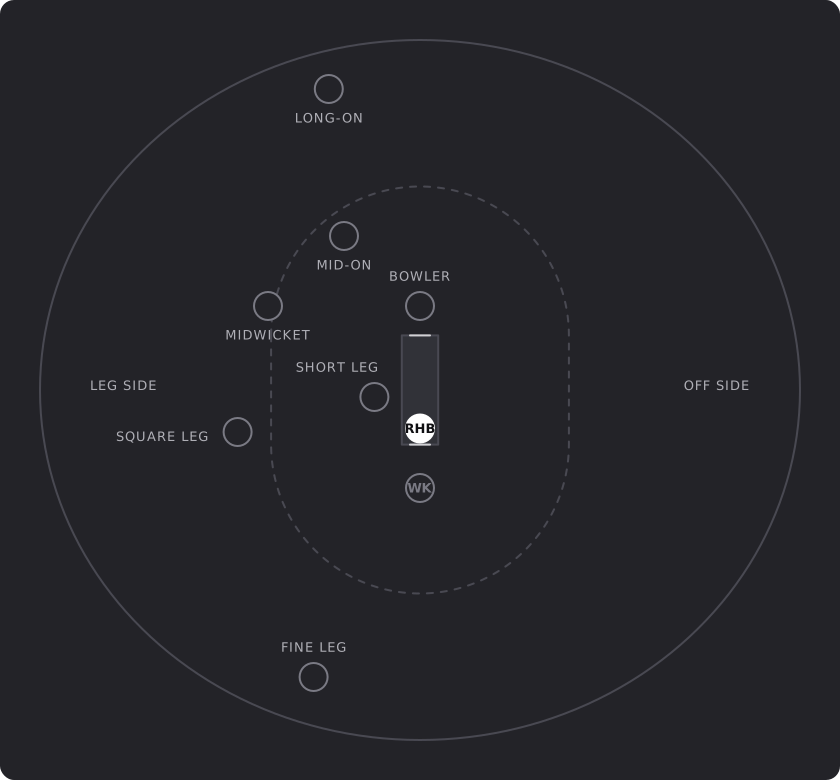
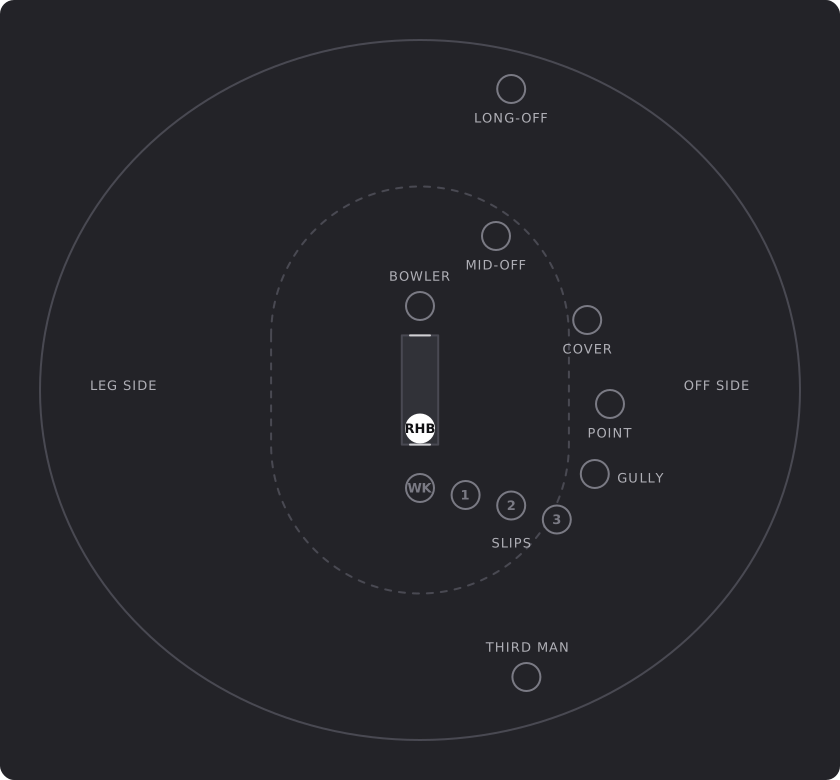
A ball that just clips the outside edge carries at catching height behind the bat on the off side, so the slips fan out exactly along that line.
Source: ESPNcricinfo coaching glossary · recall
A thick or angled edge, especially off a back-foot shot, flies wider and harder than a slip nick, and the gully covers that gap between slip and point.
Source: ESPNcricinfo coaching glossary · recall
Ring fielders sit about thirty yards out to cut off the pushed single and the firmly struck shot, keeping the batters to no run or one.
Source: Recognised cricket coaching material · recall
A deliberate steer or a streaky edge that beats the cordon rolls away towards the boundary behind point, and third man is there to hold it to one or two.
Source: ESPNcricinfo coaching glossary · recall
The biggest straight hits go back over the bowler, so those two deep fielders guard the longest carry and turn a would-be six into two or three.
Source: Recognised cricket coaching material · recall
Pushing a catcher or a saver back trades the single, which is now on offer, for cutting off the four, a common move once a batter is set.
Source: ESPNcricinfo · applied
Balls worked off the hip or the pads square on the leg side are the bread and butter of a batter's scoring, so square leg cuts off that easy single.
Source: ESPNcricinfo coaching glossary · recall
Against a batter yet to get in, the captain backs an early chance, so slips, gully and bat-pad come in and the odd single is left unguarded.
Source: Recognised cricket coaching material · applied
Deep square fielders on each side let the batter take a single to them but stop the cut and the pull going for four, keeping the run rate down.
Source: ESPNcricinfo · applied
Bat-pad catches pop up softly just off the bat against turn, so those two suicidal close positions only make sense when a spinner is turning it past the edge.
Source: Recognised cricket coaching material · applied
Test 2Slip and close catchingTake a test
First slip tracks the ball from the bowler's hand; second slip and wider watch the edge of the bat, which gives the quickest read on a fast, deflected chance.
Source: ESPNcricinfo coaching glossary · recall
Relaxed hands that ride back on impact cushion the pace of the nick, whereas stiff fingers act like a wall and pop the ball out.
Source: Recognised cricket coaching material · recall
A nick off a quick bowler comes through hard and flat, so first slip drops back to let it carry, while a spinner's edge is slower and calls for a closer, finer position.
Source: ESPNcricinfo coaching glossary · applied
Most edges travel below waist height, so a fielder already rising has to drop back down again, losing the split second a sharp catch needs.
Source: Recognised cricket coaching material · applied
Statistically the thickest cluster of catchable edges goes to second slip, so the safest catcher tends to be stationed there rather than at first.
Source: ESPNcricinfo · recall
With thumbs together and fingers down, the hands form a cup under a ball dipping towards the boots, which is the shape most slip chances need.
Source: Recognised cricket coaching material · recall
Square of the wicket, the gully is closer to the bat's arc and the edge is a flat cut or push, so there is less time to sight and move to it.
Source: ESPNcricinfo coaching glossary · applied
A bat-pad catch flies off at an unpredictable angle and dies quickly, so the fielder stays balanced and loaded to dive left or right instantly.
Source: Recognised cricket coaching material · applied
Reaching or grabbing early tightens the hands too soon; letting the ball travel into soft, relaxed fingers is what completes the catch.
Source: ESPNcricinfo · applied
A ball sliding down leg can tickle the glove or the inside edge and run through fine, and the leg slip stands just behind square to snap that chance up.
Source: ESPNcricinfo coaching glossary · recall
Test 3The outfield, the chase and the throwTake a test
Curving onto the ball so the throwing side is trailing lets the fielder pick up and release in one motion without breaking stride.
Source: ESPNcricinfo coaching glossary · recall
A little skip-and-plant transfers the run-up's momentum into the throw, adding distance and pace without a big loss of accuracy.
Source: Recognised cricket coaching material · recall
A flat throw arrives quickest for a direct hit or a clean take over the stumps, but it is only worth the risk when the run-out chance is real.
Source: ESPNcricinfo · applied
A single well-judged bounce keeps a very long throw on target and lets the keeper take it cleanly at glove height rather than reaching or diving.
Source: Recognised cricket coaching material · applied
If the throw beats the stumps and no one is behind, the batters run again, so a backer-up sprints into line to cut off the extra runs.
Source: ESPNcricinfo coaching glossary · recall
Sliding lets a sprinting fielder get a hand or a boot to the ball at full stretch and drag or flick it back before it crosses for four.
Source: Recognised cricket coaching material · applied
Parrying or tossing the ball infield before touching the rope, then returning to complete the catch, is the legal way to save a six on the boundary.
Source: ESPNcricinfo coaching glossary · recall
Timing a few steps in with the delivery means the fielder is already moving towards the ball, not flat-footed, when it comes off the bat.
Source: Recognised cricket coaching material · applied
A visible, accurate arm in the deep deters batters from chancing a second or a sharp single into that region for the rest of the innings.
Source: ESPNcricinfo · applied
A long barrier with the body behind the hands makes sure a misfield does not cost four, and holding the batters to two is the deep fielder's basic job.
Source: Recognised cricket coaching material · recall
Test 4Wicket-keepingTake a test
Up at the stumps the keeper can stump a batter who overbalances or misses, which is worth the harder take against spin and slow-medium, but not against genuine pace.
Source: ESPNcricinfo coaching glossary · recall
From a deeper position the keeper lets a quick bowler's delivery come down from its peak into the gloves at a comfortable height, with more time to move to any edge.
Source: Recognised cricket coaching material · recall
A big-turning leg break that starts at leg stump and spins away past off forces the keeper to move late and take it wide, often one-handed, outside the off stump.
Source: ESPNcricinfo · applied
The batter's back and legs hide the ball for a moment, so the keeper has to anticipate the line, step round quickly and take it almost blind.
Source: Recognised cricket coaching material · applied
With the keeper up, a batter who tries to charge a slower ball risks being stumped, so it pins him in the crease and cuts off the advance down the pitch.
Source: ESPNcricinfo · applied
Riding the hands back with the pace of the ball absorbs the sting and keeps the ball in the gloves, exactly as a slip fielder uses soft hands.
Source: Recognised cricket coaching material · recall
A delivery gripping broken ground can bounce steeply or scuttle through, so the keeper stays low and lets the ball come rather than committing early.
Source: ESPNcricinfo · applied
If the batter's foot is over the popping crease and off the ground when the keeper gathers, the bails come off and the batter is out stumped.
Source: ESPNcricinfo coaching glossary · recall
Taking a position a fraction outside off gives the keeper an unobstructed view of the ball all the way, and he steps back across for anything down leg.
Source: Recognised cricket coaching material · applied
Behind the stumps he sees the pitch and the batter best, so he calls fielding adjustments, and he sprints to back up throws at the bowler's end every ball.
Source: ESPNcricinfo · recall
Test 5Run-outs and pressure fieldingTake a test
From close range with a clear sight of the stumps, a direct hit removes the extra second a relay throw costs, and that second is often the whole margin.
Source: ESPNcricinfo coaching glossary · applied
The run-out is likeliest where the batter has furthest still to travel, so the throw goes to the end the trailing or slower runner is heading for.
Source: Recognised cricket coaching material · recall
Snatching at the stumps before the ball is secure risks fumbling both, so the safe method is a clean catch and then a controlled hand or ball onto the bails.
Source: ESPNcricinfo coaching glossary · recall
If the throw beats everyone, the ball runs away and the batters take another run or two, so someone sprints into line behind the target end every time.
Source: Recognised cricket coaching material · applied
A fielder in front of the wicket square of the pitch has an unobstructed throw to the bowler's end, whereas the striker's end is often screened by the batter.
Source: ESPNcricinfo · applied
Moving in hard to meet the ball takes metres and a fraction of a second off the return, which is the difference between a run saved and a run-out made.
Source: Recognised cricket coaching material · applied
Squeezing the circle in turns a routine push-and-run into a coin-flip, and the batting side either takes the risk or lets the required rate climb.
Source: ESPNcricinfo · applied
Deliberately deceiving the batters with a sham throw or gather is fake fielding, and the umpires award the batting side five penalty runs.
Source: ESPNcricinfo · recall
With both batters stranded together, breaking the wicket at the vacant end runs out whichever batter has not made good his ground there, so there is no need to rush wildly.
Source: Recognised cricket coaching material · applied
A fielder posted deeper square lets the batter push a single but denies the comfortable two, so the score moves along in ones rather than twos and fours.
Source: ESPNcricinfo · applied
Test 6Ground fielding techniqueTake a test
Standing a few metres from the bat, they have almost no time to get out of the way.
Source: Recognised cricket coaching material · applied
A low, balanced stance lets him move quickly either way.
Source: Recognised cricket coaching material · recall
The one-handed pick-up is quicker but riskier, so it is kept for chances to run a batter out.
Source: Recognised cricket coaching material · applied
Getting the head down keeps the eyes on the ball as it arrives.
Source: Recognised cricket coaching material · recall
Lining up the body with the target makes the throw more accurate.
Source: Recognised cricket coaching material · applied
Two hands together make a wider, safer target than one.
Source: Recognised cricket coaching material · recall
Getting the ball back quickly is part of the stop; a slow return gives away extra runs.
Source: Recognised cricket coaching material · applied
The fielder lines up and turns side-on, so his leg forms a barrier behind his hands.
Source: Recognised cricket coaching material · applied
A good dive is only half the job: he gets up, checks the batters and returns the ball.
Source: Recognised cricket coaching material · applied
With no run-out on and a bumpy outfield, the long barrier puts the body behind the hands.
Source: Recognised cricket coaching material · applied
Test 7Catching high ballsTake a test
A ball hit very high can move about on the way down, so the fielder must keep adjusting.
Source: Recognised cricket coaching material · recall
Giving with the ball cushions it so it does not bounce out.
Source: Recognised cricket coaching material · recall
A fielder who knows where the rope is can take the catch without stepping over it.
Source: Recognised cricket coaching material · applied
Looking up into the lights, fielders can briefly lose sight of the ball.
Source: Recognised cricket coaching material · recall
Running through the catch keeps his eyes and hands on the ball as it drops.
Source: Recognised cricket coaching material · applied
Batters swing hard at the death, so many chances go up towards the boundary.
Source: Recognised cricket coaching material · applied
A batter given a life can make the fielding side pay heavily over the rest of his innings.
Source: Recognised cricket coaching material · applied
Judging the line early lets the fielder get under the ball and claim it before it arrives.
Source: Recognised cricket coaching material · applied
Turning and running is faster than backpedalling, and he picks the ball up again over his shoulder.
Source: Recognised cricket coaching material · applied
The fielder running in has the ball in front of him and an easier catch than one running back.
Source: Recognised cricket coaching material · applied
Test 8Fielding as a teamTake a test
On a big, loud ground a clear signal reaches a fielder that a shout cannot.
Source: Recognised cricket coaching material · recall
The captain is in charge of the field, though bowlers and captain plan it together.
Source: Recognised cricket coaching material · recall
A lively, supportive field helps the bowler and makes the batters feel hemmed in.
Source: Recognised cricket coaching material · recall
The field is set to a plan; a fielder out of place leaves the gap the plan meant to close.
Source: Recognised cricket coaching material · applied
Catching edges or sharp cuts takes reactions that improve with repeated practice there.
Source: Recognised cricket coaching material · applied
Standing near the bowler, they pass on plans and help keep him calm.
Source: Recognised cricket coaching material · recall
One clear call stops two fielders colliding or leaving the ball for each other.
Source: Recognised cricket coaching material · applied
The plan starts with the captain and ends with the bowler checking it before he bowls.
Source: Recognised cricket coaching material · applied
The call tells the fielder, who may not see the batters, which end to throw to.
Source: Recognised cricket coaching material · applied
Two fielders work together near the rope: one stops the ball, the other takes it and throws.
Source: Recognised cricket coaching material · applied
Test 9Wicket-keeping techniqueTake a test
Small side steps keep the body square and balanced for the take.
Source: Recognised cricket coaching material · recall
Fingers down and gloves together form a pocket for a low ball.
Source: Recognised cricket coaching material · recall
Fingers pointing at the ball risk injury; up or sideways makes a safe pocket.
Source: Recognised cricket coaching material · recall
A keeper who gets his body in line has a second chance if the gloves miss.
Source: Recognised cricket coaching material · applied
Inner gloves protect the hands over a long day of taking hard balls.
Source: Recognised cricket coaching material · recall
A steady head lets him follow the ball off the pitch and past the bat.
Source: Recognised cricket coaching material · applied
Byes are runs taken off balls that passed the keeper without touching the bat or body.
Source: Recognised cricket coaching material · recall
The stumping needs a clean take first; only then can the keeper break the wicket.
Source: Recognised cricket coaching material · applied
Rising with the delivery and getting in line set up a clean, soft take.
Source: Recognised cricket coaching material · applied
Standing up means crouching just behind the stumps, close enough to stump the batter.
Source: Recognised cricket coaching material · applied
Test 10Fielding practiceTake a test
The ball is thrown into the cradle and comes off it unpredictably, like an edge.
Source: Recognised cricket coaching material · recall
Skills practised slowly can break down when the game is fast.
Source: Recognised cricket coaching material · recall
The net sends the ball off at odd angles, as an edge or a deflection would.
Source: Recognised cricket coaching material · recall
A single stump is a small target, which sharpens the aim for a direct hit.
Source: Recognised cricket coaching material · recall
Warm-ups prepare muscles and hands, so the first chance of the day is not dropped.
Source: Recognised cricket coaching material · recall
Close chances arrive very fast, so practice copies that speed.
Source: Recognised cricket coaching material · applied
Numbers show where the side is losing runs and chances in the field.
Source: Recognised cricket coaching material · applied
A session builds from gentle warm-up work to full-speed drills and ends with a cool-down.
Source: Recognised cricket coaching material · applied
Drills start gently and build up to the speed of real edges.
Source: Recognised cricket coaching material · applied
He took 12 of 18 chances (12 taken + 6 dropped): two-thirds.
Source: Recognised cricket coaching material · applied
Sources
ESPNcricinfo and its coaching glossary for technique and tactics; recognised cricket coaching material for stroke play, bowling actions and field settings; general cricket knowledge for match situations. Level 3 is skills and judgement, not the Laws, so the MCC code is cited only where a Law underpins a tactical point. Questions are authored from these sources, not reproduced from them.
- Recognised cricket coaching material71
- ESPNcricinfo coaching glossary15
- ESPNcricinfo14