
Football · Level 6: Advanced · Sub-level 6.64
Marking Systems: Zonal, Man-Oriented and Hybrid
10 tests · 100 facts · updated 12 October 2026 · markdown
How marking actually works rather than what the schemes are called: handing a runner over at a zone boundary, what a defender watches, how close to stand, tracking runners from deep, marking inside the box in open play, the duel, who owns the decision, dealing with a dropping forward, choosing a scheme for an opponent, and what happens once it breaks.
Each test below is ten questions on Insporta. The list under a test is what the questions check: one fact per question, with the source it was written from. Read it before the test, or come back from a wrong answer.
Test 1Handing a runner overTake a test
The hand-over has to happen while responsibility overlaps; done late, there is a moment when the runner belongs to nobody, and that moment is the pass.
Source: Coaching literature (marking schemes) · applied
The player receiving the runner is facing the play and can see the man and the ball, which is why his call is the one usually trusted. It is a convention rather than a rule, and calls travel both ways in practice.
Source: Coaching literature (marking schemes) · applied
Two markers on one attacker is one marker missing elsewhere, and the free player is by definition in the zone the pair have just vacated.
Source: Coaching literature (marking schemes) · applied
A rule usable mid-sprint has to be readable from position alone, which is what makes depth workable and 'whoever saw him first' useless.
Source: Coaching literature (marking schemes) · applied
A hand-over travelling across the pitch has to be started before he arrives, which is why the call comes from the defender who can see the run rather than from the one being passed.
Source: Coaching literature (marking schemes) · applied
A rule has to be usable at speed, and a visible line — the halfway line, the edge of the middle third — is the one reference a running defender can check without thinking.
Source: Coaching literature (marking schemes) · applied
Following through a crossover puts two defenders on the same path and opens the ground between them, which is the whole point of the movement.
Source: Coaching literature (marking schemes) · recall
A hand-over needs somebody to hand to; without cover in the next zone, releasing the runner simply frees him.
Source: Coaching literature (marking schemes) · applied
The trade is made by zone of the pitch: tracking is cheap high up and expensive near your own box, so the scheme changes where the cost changes.
Source: Coaching literature (marking schemes) · applied
The hand-over frees him for the zone, and the danger is the habit of watching the man he just released while somebody else arrives behind him.
Source: Coaching literature (marking schemes) · applied
Test 2What the defender watchesTake a test
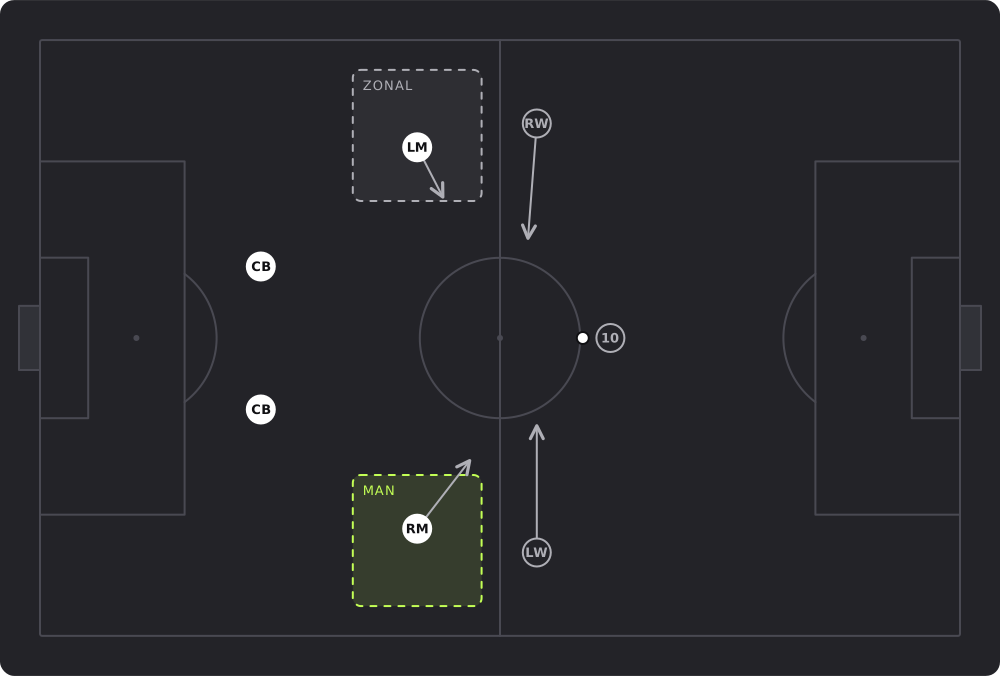
Zonal defending is triggered by the ball, so watching it is what lets him move before the pass; the attacker is tracked without being stared at.
Source: Coaching literature (marking schemes) · applied
Ball-watching is not looking at the ball but losing everything else while doing so, which is why the coaching cue is a short glance rather than a stare.
Source: Coaching literature (marking schemes) · recall
The scheme decides the hierarchy: man-orientation asks him to know where his opponent is first, which is exactly the trade that makes it vulnerable to the ball he cannot see.
Source: Coaching literature (marking schemes) · recall
Every head turn is a moment of blindness, and the body position that avoids it is worth more than the extra half-metre of closeness it costs.
Source: Coaching literature (marking schemes) · applied
A ball forty metres away cannot arrive in the next second, but a runner into the space behind decides the phase, which is why the priority inverts as the ball goes away.
Source: Coaching literature (marking schemes) · applied
Zonal responsibility is triggered by the ball, not by an opponent's movement, which is why an attacker standing in the zone does not by itself pull the defender anywhere.
Source: Coaching literature (marking schemes) · recall
The furthest defender from the ball is the one guarding the blind-side run, and he cannot do that while watching the play he is far from.
Source: Coaching literature (marking schemes) · applied
Facing the ball squarely puts the attacker behind him, and the movement that beats him happens in the second his shoulders are turned.
Source: Coaching literature (defending the penalty area) · applied
The picture goes stale quickly, and a long look at either reference costs as much as not looking: the habit coaches ask for is short and repeated rather than thorough.
Source: Coaching literature (marking schemes) · applied
Ball, man and space are the three references every scheme orders differently; officials are not one of them, and a defender who plays the offside line by the flag is defending the wrong thing.
Source: Coaching literature (marking schemes) · recall
Test 3How close to standTake a test
Tight marking is about the pass rather than the duel: a passer who cannot see a clean angle looks elsewhere, which is the whole return on the risk.
Source: Coaching literature (marking schemes) · applied
Closeness costs recovery: with no distance to work in, a single movement past his shoulder leaves him behind the play.
Source: Coaching literature (marking schemes) · applied
Distance is chosen against the threat: with nothing to fear in behind, the cost of standing close disappears and the reception itself becomes the thing worth denying.
Source: Coaching literature (marking schemes) · applied
Being beaten by the same action twice means the distance is wrong, and against a spin the answer is more room rather than less.
Source: Coaching literature (defensive duels) · applied
Distance follows the ball rather than the man: a pass twenty metres away cannot be received, so the defender can stand off and see more.
Source: Coaching literature (marking schemes) · applied
Tightness is priced by consequence: a free touch on the edge of the area is a chance, and the same touch in midfield is not.
Source: Coaching literature (marking schemes) · applied
The tighter the marker, the more reliably he can be led, which is why tight marking is answered by movement rather than by strength.
Source: Coaching literature (marking schemes) · applied
A stationary attacker is not the threat; the pass into him and the ground behind him are, and the defender's position should answer both.
Source: Coaching literature (marking schemes) · applied
Standing in front wins the pass but loses the run; the reception is conceded on purpose so that the more dangerous action is covered.
Source: Coaching literature (marking schemes) · applied
Marking distance is a risk setting, and a team chasing a goal accepts the space behind in exchange for winning possession earlier.
Source: Coaching literature (marking schemes) · applied
Test 4Runners from deepTake a test
One defender cannot hold two, so the order is fixed in advance: the man he is already responsible for stays his until an explicit hand-over, and the second is called out loud.
Source: Coaching literature (marking schemes) · applied
The run is tracked from its origin because that is the only defender with time to react; deciding at the destination means deciding too late.
Source: Coaching literature (marking schemes) · recall
Treating the box edge as an automatic hand-over is how runners arrive free: inside the area, assumptions cost goals, so the tracker crosses it with his man.
Source: Coaching literature (defending the penalty area) · applied
Marking the front players and leaving the ones behind them is the classic incomplete scheme: the danger arrives from a line nobody was told to cover.
Source: Coaching literature (marking schemes) · applied
Everything outside his field of view arrives without warning, and the shoulder is exactly where a runner from midfield enters it.
Source: Coaching literature (marking schemes) · applied
Tracking is not free: the space he leaves is the second wave's, which is why teams cap how far a defender is allowed to follow.
Source: Coaching literature (marking schemes) · applied
The inside lane leads to goal and the outside one leads to a cross, so the defender nearest the middle keeps the more direct threat and the flank is handed over.
Source: Coaching literature (marking schemes) · applied
The pass arrives at the runner's stride rather than after it, so a defender who is trailing is beaten before the ball comes.
Source: Coaching literature (marking schemes) · applied
He cannot cover the lane from inside it: standing goal-side and towards the ball means the pass has to pass him and the runner has to go around him.
Source: Coaching literature (defensive organisation) · applied
A run from deep almost always starts with a step in the opposite direction to buy separation, and that step is visible to the man marking him well before the pass is possible.
Source: Coaching literature (marking schemes) · applied
Test 5Marking inside the box in open playTake a test
Goal-side keeps him between the danger and his net, and the half-step towards the ball means he meets the delivery first if it comes short.
Source: Coaching literature (defending the penalty area) · recall
Height is spent where headers at goal are most often won, which is the middle of the six-yard box; the near post is manned to stop the flick-on rather than to win duels.
Source: Coaching literature (defending the penalty area) · applied
An onside attacker standing there commits no offence, and he cannot be held or pushed away inside the area, so the answer is to occupy the position in front of him before he takes it.
Source: IFAB Laws 11 and 12 / coaching literature · applied
A set piece is defended from a plan; open play arrives with the defenders wherever the previous action left them.
Source: Coaching literature (defending the penalty area) · applied
The player left outside is there for exactly this, and pulling everybody into the box is how a cleared cross becomes a shot.
Source: Coaching literature (defending the penalty area) · applied
One defender cannot cover two, so he takes the more dangerous position and makes the second one somebody's problem out loud rather than hoping.
Source: Coaching literature (defending the penalty area) · applied
Inside the area the priority is the space and the arriving player; a defender who follows a decoy out is exactly what the movement was for.
Source: Coaching literature (defending the penalty area) · applied
The second ball in the box goes to whoever moved first, and a defender watching the flight starts a stride behind the man he was marking.
Source: Coaching literature (defending the penalty area) · applied
A near-post touch changes the ball's direction inside the six-yard box, and no goalkeeper can adjust to that in the distance available.
Source: Coaching literature (defending the penalty area) · applied
Neither pure scheme survives a good delivery: zones concede the specialist arriving late, and pure man-marking concedes the ball nobody is standing under.
Source: Coaching literature (defending the penalty area) · applied
Test 6The defensive duelTake a test
Delaying is a distance problem: too close and the first touch past him ends it, too far and he is only an observer while the pass is played.
Source: Coaching literature (defensive duels) · applied
Cover converts a gamble into a bet worth taking: the first defender can be wrong once without the attack going past the pair.
Source: Coaching literature (defensive duels) · applied
For a wide carrier the touchline is a free defender, so the default is outward; showing inside is a decision the team has to have made together.
Source: Coaching literature (defensive duels) · recall
Showing inside is only sound if somebody is waiting there; it is a team decision rather than an individual preference.
Source: Coaching literature (defensive duels) · applied
Speed into a duel removes the ability to react, and a carrier only has to move once to leave him going the other way.
Source: Coaching literature (defensive duels) · applied
Defending an opponent pattern means conceding what he does not want: giving him the outside makes the move he has practised unavailable and hands him the one he has not.
Source: Coaching literature (defensive duels) · applied
Doubling up wins the ball or loses two defenders, which is why it is reserved for moments where the ball cannot easily leave.
Source: Coaching literature (defensive duels) · applied
The recovery run has to arrive somewhere useful, and the useful place is the goal side of the carrier rather than his heels.
Source: Coaching literature (defensive duels) · applied
A forward who cannot turn is not dangerous, and reaching for the ball is exactly what lets him spin away.
Source: Coaching literature (defensive duels) · applied
Risk is priced by what a mistake costs, and forty metres from goal there are both defenders and seconds between the error and the consequence.
Source: Coaching literature (defensive duels) · applied
Test 7The offside lineTake a test
Law 11 measures an offside position against the second-last opponent, which is the goalkeeper and the deepest defender in most situations but not all.
Source: IFAB Law 11 / coaching literature · recall
The reference is whichever opponent is second-last, so a single defender who fails to step becomes it and every attacker in front of him is onside.
Source: IFAB Law 11 / coaching literature · applied
Being in an offside position is not an offence in itself; it becomes one when the player interferes with play, with an opponent, or gains an advantage.
Source: IFAB Law 11 / coaching literature · recall
Law 11 lists obstructing the goalkeeper's sight among the actions that turn an offside position into an offence, which is why a stationary player in front of the keeper is punished and one merely standing offside is not.
Source: IFAB Law 11 / coaching literature · recall
The picture is frozen when the ball is played, which is exactly why a late run beats a high line however far the receiver travels afterwards.
Source: IFAB Law 11 / coaching literature · applied
Because the reference is the second-last opponent, the slowest defender sets it for everybody, so the movement is only worth making together.
Source: IFAB Law 11 / coaching literature · applied
The line's risk is measured against what is behind it: the same height that was safe against a target man is a gift to a runner who beats the defenders to the ball.
Source: Coaching literature (defensive organisation) · applied
Law 11 exempts the ball received directly from a throw-in, a goal kick or a corner kick; a deliberate play by a defender is a different exemption with its own conditions.
Source: IFAB Law 11 / coaching literature · recall
A player who is offside and not involved is defending nothing; stepping up to punish him concedes the space in front, which is where the ball actually is.
Source: IFAB Law 11 / coaching literature · applied
Under Law 11 an attacker who was in an offside position still gains an advantage from a ball that rebounds from a deliberate save, exactly as from a deflection off an opponent. A deliberate play by an opponent, such as a controlled pass or clearance, is different: it puts him back onside, which is why the Law separates the two.
Source: IFAB Laws of the Game 2025/26, Law 11 (deliberate play and deliberate save) / coaching literature · recall
Test 8Dealing with a forward who dropsTake a test
Cover is taken by whoever is already between the space and the goal, because a player who has to run past the ball to fill it arrives after the pass.
Source: Coaching literature (marking schemes) · applied
Zonal defending answers arrivals with whoever owns the space, which is precisely what keeps the back line intact while he drops.
Source: Coaching literature (marking schemes) · recall
Stepping out is legitimate and the cost is known in advance; what fails is a scheme that permits it without naming the cover.
Source: Coaching literature (marking schemes) · applied
The release was conditional on him going away from goal; the moment he turns back, responsibility returns to the line, and the hand-over has to be called the other way.
Source: Coaching literature (marking schemes) · applied
The trade is real in both directions: the line stays whole, and a good passer is given the ball facing forward.
Source: Coaching literature (marking schemes) · applied
The whole value of coming from behind is that the forward's options are cut on one side; arriving square gives that away.
Source: Coaching literature (marking schemes) · applied
Alternating drops are designed to make the decision twice; splitting the responsibility in advance means the answer never has to be improvised.
Source: Coaching literature (marking schemes) · applied
The measurable symptom is structural: a line that is already stretched while the ball is still being circulated has been pulled apart by movement rather than by passing.
Source: Coaching literature (marking schemes) · applied
Schemes are chosen against threats rather than in the abstract: a player who decides matches justifies a cost that the same movement by somebody else would not.
Source: Coaching literature (marking schemes) · applied
The space between the lines is created by the distance between them, and shortening it from in front costs nothing at the back.
Source: Coaching literature (marking schemes) · applied
Test 9Choosing the schemeTake a test
Following players is expensive and pays when a small number of them decide games, which is what makes it a targeted rather than a default choice.
Source: Coaching literature (marking schemes) · applied
A single man-orientation inside a zonal block is affordable only while it barely moves anybody, so it is given to the defender who would have been near that opponent anyway.
Source: Coaching literature (marking schemes) · applied
Personnel decides which risks are affordable: the recovery pace goes behind, and the defender who cannot chase is given a job that never asks him to.
Source: Coaching literature (defensive organisation) · applied
Tracking hands the opponent control of the defenders' movement: they set the distances by choosing theirs, which is the one defensive cost a team cannot cap for itself.
Source: Coaching literature (marking schemes) · applied
Protecting a lead is about denying space, and a block that answers the ball rather than the runners is far harder to drag out of position with decoys.
Source: Coaching literature (marking schemes) · applied
The cost of the compromise is cognitive rather than physical: every situation has to be classified before it can be defended.
Source: Coaching literature (marking schemes) · applied
Man-marking removes cover by design, so the scheme is only as good as the duels it creates, and a team that loses them is left with nothing behind.
Source: Coaching literature (marking schemes) · applied
With fewer players in a zone, following opponents guarantees somebody is unmarked; holding space at least makes the opponent play through a shape.
Source: Coaching literature (marking schemes) · applied
A scheme can be applied to two players rather than to a team, which buys the cover of a zonal block and the tracking that the two specific threats require.
Source: Coaching literature (marking schemes) · applied
Everything else on the list is a fact about this match; habit is a fact about the coach, and it is the reason schemes outlive the conditions that justified them.
Source: Coaching literature (marking schemes) · applied
Test 10When the scheme breaksTake a test
The scheme is rebuilt from the outside in, and the only thing that buys the time to rebuild it is somebody making the ball travel slowly.
Source: Coaching literature (defensive organisation) · applied
Ordinary responsibilities do not survive a broken shape, so the rule falls back to whoever can act now rather than whoever should have.
Source: Coaching literature (defensive organisation) · applied
The count decides his job: outnumbered he drops into the middle, and level he can go to the ball, so it is the first thing he needs and the only thing one glance can give him.
Source: Coaching literature (defensive organisation) · applied
Outnumbered, the aim is to make the attack take the longest route: conceding the wide pass costs metres, while conceding the middle costs the goal.
Source: Coaching literature (defensive organisation) · applied
Law 11 judges an offside position against the second-last opponent, so a team-mate deeper than the line becomes the reference and plays the whole attack onside.
Source: IFAB Law 11 / coaching literature · applied
The reason the attack is dangerous is a spare man, so the returning defender's job is to remove that surplus rather than add a second player to the ball.
Source: Coaching literature (defensive organisation) · applied
A recovering defender is behind the attacker, and Law 12 punishes that challenge hardest: a foul that denies an obvious goal-scoring opportunity is a sending-off, reduced to a caution only when it happens inside the penalty area and was an attempt to play the ball, and a lunge from behind that endangers an opponent is serious foul play.
Source: IFAB Law 12 / coaching literature · applied
The break was a moment rather than a verdict, and a defence that abandons its scheme after every one of them ends up with no scheme at all.
Source: Coaching literature (defensive organisation) · applied
A repeated break is evidence about the plan rather than about the players, which is the moment a coach is expected to intervene.
Source: Coaching literature (defensive organisation) · applied
The presser needs the option removed rather than a second challenger; the pair defends the carrier and his best pass instead of the same ball twice.
Source: Coaching literature (defensive organisation) · applied
Sources
IFAB Laws of the Game / UEFA & FIFA technical reports / Opta & StatsBomb definitions / coaching literature
- Coaching literature (marking schemes)55
- Coaching literature (defending the penalty area)11
- Coaching literature (defensive duels)11
- Coaching literature (defensive organisation)11
- IFAB Law 11 / coaching literature9
- IFAB Laws 11 and 12 / coaching literature1
- IFAB Laws of the Game 2025/26, Law 11 (deliberate play and deliberate save) / coaching literature1
- IFAB Law 12 / coaching literature1