
Football · Laws of the Game
Law 12: Fouls and Misconduct
7 parts · 15 tests · 150 facts · updated 12 October 2026 · markdown
Law 12 is the largest Law and splits into a foul half and a misconduct half. A direct free kick is given when a player charges, jumps at, kicks, pushes, strikes, tackles or trips an opponent, or attempts any of these, in a way the referee judges careless, reckless or using excessive force, and also for holding, for impeding with contact, for biting or spitting, for a handball offence, and for throwing an object at, or playing the ball with a held object toward, the ball or a person. Careless carries no card, reckless a caution, and using excessive force a send-off. A defender's direct-free-kick offence in their own penalty area, while the ball is in play, is a penalty kick. An indirect free kick covers dangerous play, impeding with no contact, dissent and offensive language, and the goalkeeper offences: handling a deliberate kick from a team-mate, handling a team-mate's throw-in, handling again after releasing the ball, and, since 2025, holding the ball more than eight seconds, which now concedes a corner kick. Cautions include delaying the restart, dissent, entering or leaving the field without permission, not respecting the required distance, persistent offences and the wide category of unsporting behaviour, which takes in simulation, tactical fouls that stop a promising attack, and certain goal celebrations. Send-offs include denying a goal or an obvious goalscoring opportunity by handball or by a foul, serious foul play, violent conduct, biting or spitting, offensive gestures and a second caution. Advantage may be played and the original offence returned to within a few seconds if it does not come.
12.121The direct free kick and the level of the challenge
The challenges and actions Law 12 punishes with a direct free kick, and the three levels a challenge is weighed at. Careless is a lack of attention, consideration or precaution when making a challenge and carries no card. Reckless is disregard for the danger to or the consequences for an opponent and must be cautioned. Using excessive force exceeds what is necessary or endangers an opponent's safety and must be a send-off. The direct-free-kick actions are charging, jumping at, kicking, pushing, striking, tackling or challenging, and tripping, each counted also as an attempt, plus holding an opponent, impeding with contact, biting or spitting at someone, and throwing an object at, or making contact with the ball using, a held object. The kick is taken from where the offence happened, and becomes a penalty kick if a defender commits it inside their own penalty area while the ball is in play. Winning the ball first is not a defence if the contact is careless, reckless or forceful.
Test 1Careless, reckless and using excessive forceTake a test
A careless challenge shows a lack of attention or precaution; it is a direct free kick with no card and no formal warning.
Source: IFAB Laws of the Game 2026/27, Law 12 · recall
Disregard for an opponent's safety makes a challenge reckless; the Law requires a caution in addition to the direct free kick.
Source: IFAB Laws of the Game 2026/27, Law 12 · recall
Using excessive force means more force than necessary is used, or the opponent's safety is endangered; the sanction is a send-off.
Source: IFAB Laws of the Game 2026/27, Law 12 · recall
A forceful two-footed lunge that endangers the opponent is excessive force: a sending-off, restarted here with a direct free kick.
Source: IFAB Laws of the Game 2026/27, Law 12 · applied
Getting a touch of the ball first does not excuse the contact; a mistimed challenge causing no danger is careless, with only the free kick.
Source: IFAB Laws of the Game 2026/27, Law 12 · applied
Kicking and attempting to kick are listed together, so a reckless swing that misses is a direct-free-kick offence and a caution.
Source: IFAB Laws of the Game 2026/27, Law 12 · applied
Speed and height that show disregard for the opponent make the first tackle reckless and cautionable; a gentle trip stays careless with no card.
Source: IFAB Laws of the Game 2026/27, Law 12 · applied
Excessive force is defined as a mandatory dismissal; winning the ball or the opponent escaping injury does not reduce it to a caution.
Source: IFAB Laws of the Game 2026/27, Law 12 · recall
Pushing is a direct-free-kick offence; its level turns on the force used, so a moderate push is careless or reckless rather than automatically excessive.
Source: IFAB Laws of the Game 2026/27, Law 12 · applied
The careless definition has three triggers: a lack of attention, a lack of consideration, or acting without precaution in the challenge.
Source: IFAB Laws of the Game 2026/27, Law 12 · recall
Test 2Which actions bring a direct free kickTake a test
Charging, jumping at, kicking, pushing, striking, tackling and tripping an opponent are the seven contact actions that carry a direct free kick.
Source: IFAB Laws of the Game 2026/27, Law 12 · recall
Holding an opponent is a direct-free-kick offence in its own right; a card follows only if it also stops a promising attack or worse.
Source: IFAB Laws of the Game 2026/27, Law 12 · recall
Impeding an opponent while making contact, such as barging or backing into them, is a direct-free-kick offence, unlike impeding with no contact.
Source: IFAB Laws of the Game 2026/27, Law 12 · applied
A direct-free-kick offence by a defender inside their own penalty area, while the ball is in play, is punished with a penalty kick.
Source: IFAB Laws of the Game 2026/27, Law 12 · applied
The penalty kick applies only to a defender's offence in their own area; an attacker's push there is an ordinary direct free kick to the defence.
Source: IFAB Laws of the Game 2026/27, Law 12 · applied
Throwing an object at the ball, an opponent or a match official is a direct-free-kick offence, taken from where the object made contact.
Source: IFAB Laws of the Game 2026/27, Law 12 · recall
Making contact with the ball using a held object is grouped with throwing an object: a direct free kick from where contact occurred.
Source: IFAB Laws of the Game 2026/27, Law 12 · recall
Biting or spitting at someone is a direct-free-kick offence and, separately, a mandatory dismissal under Law 12's sending-off list.
Source: IFAB Laws of the Game 2026/27, Law 12 · recall
Charging is a direct-free-kick offence only when careless, reckless or forceful; a fair shoulder-to-shoulder challenge for a playable ball is legal.
Source: IFAB Laws of the Game 2026/27, Law 12 · applied
A direct free kick for a foul is taken from where the offence was committed, not from where the ball or the fouled player ended up.
Source: IFAB Laws of the Game 2026/27, Law 12 · applied
12.122Handball
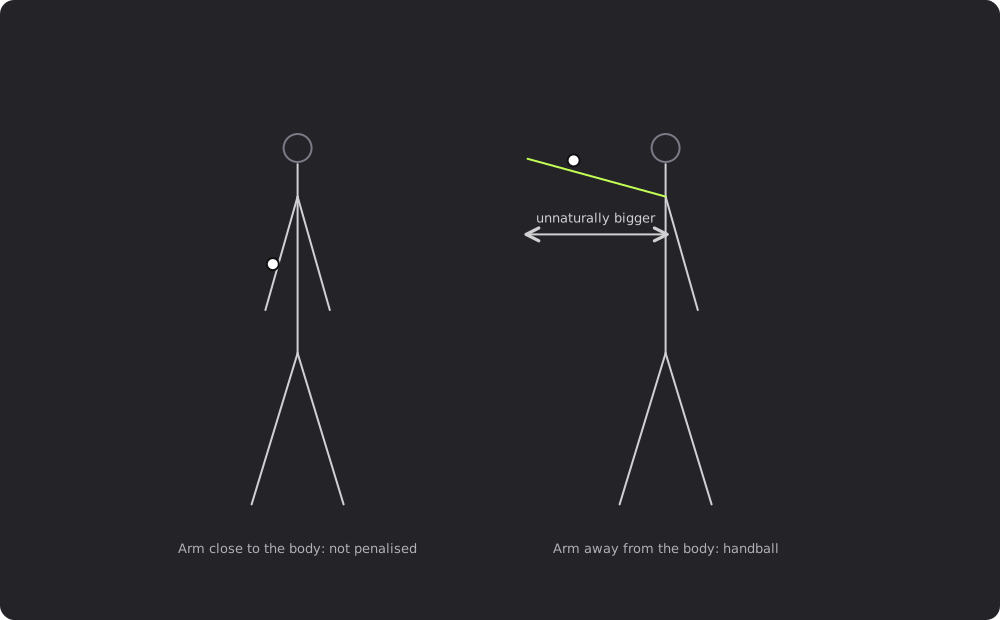
When touching the ball with the hand or arm is an offence and when it is not. It is an offence to deliberately touch the ball with the hand or arm, including moving the hand or arm towards the ball; to touch it when the hand or arm has made the body unnaturally bigger, meaning the position is not a consequence of, or justifiable by, the body's movement for that situation; and to score in the opponents' goal directly off the hand or arm, or immediately after the ball has touched one's own hand or arm, even if accidental, the goalkeeper included. It is normally not an offence when the ball comes off the player's own head, body or foot, or a nearby player, onto the hand or arm; when the hand or arm is close to the body and has not made it unnaturally bigger; or when a player falls and the hand or arm is between the body and the ground to support it, rather than extended sideways or upward. The upper boundary of the arm is level with the bottom of the armpit. A goalkeeper cannot commit a handball offence inside their own penalty area. The restart is a direct free kick, or a penalty kick for a defender's handball in their own penalty area.
Test 1When handball is an offenceTake a test
Deliberately playing the ball with the hand or arm, including moving it towards the ball, is always an offence whatever the arm's position.
Source: IFAB Laws of the Game 2026/27, Law 12 · recall
Law 12 gives moving the hand or arm towards the ball as an example of deliberate handball, so an outward arm movement makes the touch an offence.
Source: IFAB Laws of the Game 2026/27, Law 12 · recall
The test is justification, not height: the arm makes the body unnaturally bigger when its position is not a consequence of the player's movement.
Source: IFAB Laws of the Game 2026/27, Law 12 · recall
An arm extended sideways beyond what the slide needs makes the body unnaturally bigger, so a ball striking it is normally penalised despite the balance claim.
Source: IFAB Laws of the Game 2026/27, Law 12 · applied
Scoring in the opponents' goal directly off the hand or arm is ruled out even when accidental, and this applies to the goalkeeper as well.
Source: IFAB Laws of the Game 2026/27, Law 12 · recall
A goal scored immediately after the ball touches the scorer's own hand or arm is disallowed even if accidental; a later, separate phase is different.
Source: IFAB Laws of the Game 2026/27, Law 12 · recall
The accidental-handball goal ban applies only to the player who handled and then scores; a team-mate finishing the move keeps the goal valid.
Source: IFAB Laws of the Game 2026/27, Law 12 · applied
Thrusting a hand at the ball is deliberate handball; by a defender in their own penalty area it is a penalty kick, with a card only if it denied a goal.
Source: IFAB Laws of the Game 2026/27, Law 12 · applied
The goalkeeper's handling exemption ends at the penalty-area line; handling outside it is a direct-free-kick offence just as for an outfield player.
Source: IFAB Laws of the Game 2026/27, Law 12 · applied
A touch on the shoulder is not handball: for handball purposes the arm starts at the bottom of the armpit and runs to the fingertips.
Source: IFAB Laws of the Game 2026/27, Law 12 · recall
Test 2When handball is not an offenceTake a test
When the ball comes off the player's own head, body or foot straight onto their hand or arm close to the body, it is not normally penalised.
Source: IFAB Laws of the Game 2026/27, Law 12 · applied
A ball deflected onto the hand or arm from a nearby player or a very short distance, with the arm close to the body, is normally not an offence.
Source: IFAB Laws of the Game 2026/27, Law 12 · applied
A hand or arm placed between the body and the ground to support a fall is allowed; an arm stretched out to the side or upward is not.
Source: IFAB Laws of the Game 2026/27, Law 12 · recall
An arm kept close to the body has not made it unnaturally bigger, so a ball hitting it is not penalised regardless of speed or intent.
Source: IFAB Laws of the Game 2026/27, Law 12 · recall
Since 2021 an accidental handball only rules out a goal the same player scores immediately; it no longer matters that it set up a team-mate later.
Source: IFAB Laws of the Game 2026/27, Law 12 · applied
The deliberate-handball and unnaturally-bigger tests do not apply to a goalkeeper inside their own penalty area, so a high hand to make a save is fine.
Source: IFAB Laws of the Game 2026/27, Law 12 · applied
Deliberateness, not location or danger, defines this offence: a deliberate handball anywhere is a direct free kick, with a card only if it also stops an attack.
Source: IFAB Laws of the Game 2026/27, Law 12 · applied
By putting the hand or arm in a position not justified by the movement, the player accepts the risk of it being hit and being penalised, deliberate or not.
Source: IFAB Laws of the Game 2026/27, Law 12 · recall
The ball coming off the player's own foot directly onto their hand or arm is one of the listed situations that is normally not a handball offence.
Source: IFAB Laws of the Game 2026/27, Law 12 · applied
Proximity matters because a player struck by a ball from very close, with the arm near the body, could not reasonably have avoided the contact.
Source: IFAB Laws of the Game 2026/27, Law 12 · recall
12.123The indirect free kick and goalkeeper offences
The offences Law 12 punishes with an indirect free kick, and the goalkeeper's own restrictions inside the penalty area. An indirect free kick is given for playing in a dangerous manner, for impeding an opponent with no contact, for dissent or offensive, insulting or abusive language, gestures or actions, for preventing the goalkeeper releasing the ball from the hands, for kicking or trying to kick the ball as the goalkeeper releases it, for initiating a deliberate trick to pass the ball to the goalkeeper with the head, chest or knee to circumvent the back-pass Law, and for any other offence for which play is stopped to caution or send off a player. A goalkeeper inside their own penalty area may not touch the ball again with the hands after releasing it and before another player touches it, and may not handle a ball deliberately kicked to them by a team-mate or received directly from a team-mate's throw-in. Since 2025 a goalkeeper who controls the ball with the hands or arms for more than eight seconds concedes a corner kick.
Test 1Indirect free kick offences and the goalkeeperTake a test
Playing dangerously, with no contact made, is an indirect-free-kick offence; contact fouls such as tripping and pushing carry a direct free kick.
Source: IFAB Laws of the Game 2026/27, Law 12 · recall
A high boot near an opponent that makes them pull out of a challenge is dangerous play: an indirect free kick, since the danger came with no contact.
Source: IFAB Laws of the Game 2026/27, Law 12 · applied
Impeding an opponent with no contact when the ball is not within playing distance is an indirect-free-kick offence; shielding is legal only with the ball close.
Source: IFAB Laws of the Game 2026/27, Law 12 · applied
Preventing the goalkeeper from releasing the ball from their hands is specifically listed as an indirect-free-kick offence.
Source: IFAB Laws of the Game 2026/27, Law 12 · recall
An opponent who kicks or tries to kick the ball as the keeper lets go of it commits an indirect-free-kick offence.
Source: IFAB Laws of the Game 2026/27, Law 12 · applied
Handling a ball deliberately kicked to them by a team-mate is an indirect-free-kick offence for the goalkeeper, taken from where the handling occurred.
Source: IFAB Laws of the Game 2026/27, Law 12 · recall
The goalkeeper may handle a ball deliberately headed, chested or kneed back to them; the restriction applies only to a deliberate kick by a team-mate.
Source: IFAB Laws of the Game 2026/27, Law 12 · applied
Using a deliberate trick to pass to the goalkeeper with the head or body to beat the back-pass Law is cautioned, with an indirect free kick to the opponents.
Source: IFAB Laws of the Game 2026/27, Law 12 · recall
Once the goalkeeper releases the ball into play, they may not handle it again until another player has touched it; doing so is an indirect-free-kick offence.
Source: IFAB Laws of the Game 2026/27, Law 12 · recall
Since 2025 a goalkeeper controlling the ball with the hands for more than eight seconds concedes a corner kick, replacing the old six-second indirect free kick.
Source: IFAB Laws of the Game 2026/27, Law 12 · recall
Test 2Goalkeeper control, dangerous play and impedingTake a test
A goalkeeper controls the ball when it is between the hands or arms, or between a hand and any surface such as the ground.
Source: IFAB Laws of the Game 2025/26, Law 12 · applied
Holding the ball in an outstretched open hand counts as control, and a goalkeeper in control cannot be challenged.
Source: IFAB Laws of the Game 2025/26, Law 12 · applied
The referee decides when control and the eight seconds begin and visually counts down the last five with a raised hand.
Source: IFAB Laws of the Game 2025/26, Law 12 · recall
The keeper may not handle a deliberate kick from a team-mate unless the keeper has clearly kicked or tried to kick the ball to release it.
Source: IFAB Laws of the Game 2025/26, Law 12 · applied
A goalkeeper inside the penalty area may not handle the ball received directly from a team-mate's throw-in.
Source: IFAB Laws of the Game 2025/26, Law 12 · applied
A scissors or bicycle kick is permissible provided it is not dangerous to an opponent.
Source: IFAB Laws of the Game 2025/26, Law 12 · recall
Playing in a dangerous manner is any action that, while trying to play the ball, threatens injury to someone, including the player themself.
Source: IFAB Laws of the Game 2025/26, Law 12 · applied
A player may shield the ball within playing distance, and may then be fairly charged by an opponent.
Source: IFAB Laws of the Game 2025/26, Law 12 · applied
Moving into an opponent's path to block them when the ball is not within playing distance is impeding without contact: an indirect free kick.
Source: IFAB Laws of the Game 2025/26, Law 12 · applied
A goalkeeper in control of the ball with the hands cannot be challenged; playing it out of the keeper's hands is an indirect free kick.
Source: IFAB Laws of the Game 2025/26, Law 12 · applied
12.124Cautionable offences
The yellow-card offences in Law 12. A player is cautioned for delaying the restart of play, dissent by word or action, entering, re-entering or deliberately leaving the field without the referee's permission, failing to respect the required distance at a corner kick, free kick or throw-in, persistent offences with no fixed number, unsporting behaviour, entering the referee review area, and excessively using the review signal. Unsporting behaviour covers simulation and attempts to deceive the referee, handling to stop a promising attack that is not a goalscoring opportunity, a foul that stops a promising attack unless a penalty is given for an attempt to play the ball, tactical fouls such as holding to break up an attack, changing places with the goalkeeper during play, verbally distracting an opponent, and celebrating a goal by removing the shirt, covering the head with the shirt or a mask, climbing the perimeter fence, or a provocative gesture. A caution can be shown while the ball is in play or out of play.
Test 1The listed cautionable offencesTake a test
Not retreating the required distance at a corner kick, free kick or throw-in is one of the specific offences Law 12 lists as a caution.
Source: IFAB Laws of the Game 2026/27, Law 12 · recall
Kicking or carrying the ball away, or otherwise holding up the opponents' restart, is cautioned as delaying the restart of play.
Source: IFAB Laws of the Game 2026/27, Law 12 · recall
Openly disputing a decision by word or by gesture is cautioned as dissent; it does not need to involve offensive language to be a yellow card.
Source: IFAB Laws of the Game 2026/27, Law 12 · recall
Coming onto or back onto the field of play without the referee's signal is a cautionable offence, celebrations included.
Source: IFAB Laws of the Game 2026/27, Law 12 · applied
A player may go off the pitch as part of a run, but stepping over the line on purpose with no permission is a caution.
Source: IFAB Laws of the Game 2026/27, Law 12 · applied
A pattern of fouling is cautioned as persistent offences even when no single foul is itself a yellow card; the Law sets no fixed number.
Source: IFAB Laws of the Game 2026/27, Law 12 · recall
When the attacking team wants the required distance, a defender who refuses to retreat the nine-plus metres is cautioned for failing to respect it.
Source: IFAB Laws of the Game 2026/27, Law 12 · applied
Entering the referee review area is a cautionable offence in its own right, separate from any dissent shown once the player is there.
Source: IFAB Laws of the Game 2026/27, Law 12 · recall
Making the review-screen gesture once is tolerated, but excessively or persistently demanding a review is its own cautionable offence.
Source: IFAB Laws of the Game 2026/27, Law 12 · applied
The referee's disciplinary authority applies whether the ball is in play or not, so a caution can be issued during any stoppage.
Source: IFAB Laws of the Game 2026/27, Law 12 · recall
Test 2Unsporting behaviour and stopping attacksTake a test
Feigning a foul or an injury to deceive the referee is simulation, a form of unsporting behaviour and a caution.
Source: IFAB Laws of the Game 2026/27, Law 12 · recall
Unsporting behaviour is the broad caution category that gathers simulation, tactical fouls, deceptive tricks and disrespect toward the game.
Source: IFAB Laws of the Game 2026/27, Law 12 · recall
A foul that stops an opponents' promising attack is cautioned; it rises to a send-off only when it denies an obvious goalscoring opportunity.
Source: IFAB Laws of the Game 2026/27, Law 12 · applied
Holding to interfere with or stop a promising attack is cautioned; whether the attack was genuinely promising, given the covering defenders, is a judgement.
Source: IFAB Laws of the Game 2026/27, Law 12 · applied
Deliberate handball that stops a promising attack short of a goalscoring opportunity is a caution, not a dismissal.
Source: IFAB Laws of the Game 2026/27, Law 12 · recall
When a penalty is awarded for an offence that was a fair attempt to play the ball, the caution for stopping the attack is not added.
Source: IFAB Laws of the Game 2026/27, Law 12 · applied
Verbally distracting an opponent during play is unsporting behaviour: a caution, with an indirect free kick to the opponents.
Source: IFAB Laws of the Game 2026/27, Law 12 · recall
Removing the shirt, or covering the head with it, when celebrating a goal is a mandatory caution; the goal itself still stands.
Source: IFAB Laws of the Game 2026/27, Law 12 · recall
Provocative, derisory or inflammatory celebrations, and climbing the perimeter fence, are cautioned; a separate act of violence or abuse could raise it further.
Source: IFAB Laws of the Game 2026/27, Law 12 · applied
Changing places with the goalkeeper without the referee's permission and during play is unsporting behaviour; both players are cautioned when play next stops.
Source: IFAB Laws of the Game 2026/27, Law 12 · applied
Test 3Celebrations, delay and other cautionsTake a test
A player must be cautioned for covering the head or face with a mask, even if the goal is disallowed.
Source: IFAB Laws of the Game 2025/26, Law 12 · applied
Leaving the field to celebrate a goal is not a cautionable offence, though players should return as soon as possible.
Source: IFAB Laws of the Game 2025/26, Law 12 · applied
Taking a free kick from the wrong position to force a retake is delaying the restart of play, a caution.
Source: IFAB Laws of the Game 2025/26, Law 12 · applied
Making unauthorised marks on the field of play is unsporting behaviour and a caution.
Source: IFAB Laws of the Game 2025/26, Law 12 · applied
Playing the ball when leaving the field of play after being given permission to leave is a caution for unsporting behaviour.
Source: IFAB Laws of the Game 2025/26, Law 12 · applied
Two separate cautionable offences, even in close proximity, bring two cautions, and a second caution is a sending-off.
Source: IFAB Laws of the Game 2025/26, Law 12 · applied
Putting off a free-kick taker with a shout earns a yellow card; the ball was out of play, so the kick then goes ahead.
Source: IFAB Laws of the Game 2025/26, Law 12 · applied
Delaying leaving the field of play when being substituted is a caution for delaying the restart of play.
Source: IFAB Laws of the Game 2025/26, Law 12 · applied
Appearing to take a throw-in but suddenly leaving it to a team-mate is listed as delaying the restart of play.
Source: IFAB Laws of the Game 2025/26, Law 12 · applied
Removing the shirt or pulling it over the head is on the list of celebrations that must be cautioned.
Source: IFAB Laws of the Game 2025/26, Law 12 · applied
12.125Sending-off offences
The direct red-card offences in Law 12 and how DOGSO and serious foul play are judged. A player is sent off for denying the opposing team a goal or an obvious goalscoring opportunity by a deliberate handball, except a goalkeeper in their own penalty area; for denying an obvious goalscoring opportunity to an opponent whose overall movement is towards goal by an offence punishable by a free kick; for serious foul play; for biting or spitting at someone; for violent conduct; for offensive, insulting or abusive language or gestures; and for receiving a second caution in the same match. An obvious goalscoring opportunity is judged on the distance between the offence and the goal, the general direction of play, the likelihood of keeping or gaining control of the ball, and the location and number of defenders. Where the offence in the penalty area was an attempt to play the ball or a challenge for it and a penalty is given, the player is cautioned instead of dismissed; for holding, pushing, pulling or no possibility to play the ball, the send-off stands. Serious foul play is a challenge for the ball that endangers an opponent or uses excessive force or brutality. Violent conduct is force or brutality used, or attempted, away from a challenge for the ball, against anyone. A sent-off player is not replaced.
Test 1Denying a goal and the obvious goalscoring opportunityTake a test
Denying an obvious goalscoring opportunity by a free-kick offence, with the attacker moving toward goal and in control, is a sending-off.
Source: IFAB Laws of the Game 2026/27, Law 12 · recall
The four considerations are the distance between offence and goal, the general direction of play, the likelihood of controlling the ball, and the location and number of defenders.
Source: IFAB Laws of the Game 2026/27, Law 12 · recall
For a penalty-area offence that was an attempt to play the ball or a challenge for it, the DOGSO dismissal drops to a caution when a penalty is awarded.
Source: IFAB Laws of the Game 2026/27, Law 12 · applied
Holding, pushing or pulling with no possibility of playing the ball keeps the DOGSO send-off even when a penalty kick is also awarded.
Source: IFAB Laws of the Game 2026/27, Law 12 · applied
Deliberately handling to deny the opposing team a goal or an obvious chance is a send-off wherever it happens, the goalkeeper inside their own area aside.
Source: IFAB Laws of the Game 2026/27, Law 12 · recall
The handball DOGSO send-off explicitly excludes a goalkeeper inside their own penalty area; the back-pass offence there is only an indirect free kick.
Source: IFAB Laws of the Game 2026/27, Law 12 · applied
A second caution in the same match is followed by a red card and dismissal; the player is not replaced and the team plays short.
Source: IFAB Laws of the Game 2026/27, Law 12 · recall
Direction of play is one of the four considerations: a move angled away from goal is not an obvious goalscoring opportunity, whatever the distance.
Source: IFAB Laws of the Game 2026/27, Law 12 · applied
The likelihood of the attacker keeping or gaining control is weighed; a ball unlikely to be controlled fails one of the DOGSO tests, leaving a caution.
Source: IFAB Laws of the Game 2026/27, Law 12 · applied
The Law frames DOGSO by a free-kick offence around an opponent whose overall movement is towards the offender's goal.
Source: IFAB Laws of the Game 2026/27, Law 12 · recall
Test 2Serious foul play, violent conduct and other dismissalsTake a test
A tackle or challenge for the ball that endangers an opponent's safety or uses excessive force or brutality is serious foul play and a sending-off.
Source: IFAB Laws of the Game 2026/27, Law 12 · recall
Both involve a challenge for the ball; it rises to serious foul play once excessive force is used or the opponent's safety is endangered.
Source: IFAB Laws of the Game 2026/27, Law 12 · recall
A challenge for the ball that endangers the opponent, such as a high-speed studs-up lunge onto the leg, is serious foul play, not merely reckless.
Source: IFAB Laws of the Game 2026/27, Law 12 · applied
Violence away from a challenge for the ball, against an opponent, a team-mate, an official or anyone else, is violent conduct and a sending-off.
Source: IFAB Laws of the Game 2026/27, Law 12 · recall
An off-the-ball blow with no attempt to play the ball is violent conduct; it can be punished whether the ball is in play or out of play.
Source: IFAB Laws of the Game 2026/27, Law 12 · applied
Violent conduct applies to force used against a team-mate, a team official, a match official or a spectator, not only against an opponent.
Source: IFAB Laws of the Game 2026/27, Law 12 · applied
Biting or spitting at someone is a mandatory red card and, as a physical offence, is restarted with a direct free kick or a penalty.
Source: IFAB Laws of the Game 2026/27, Law 12 · recall
Offensive, insulting or abusive language or gestures are a sending-off offence, whoever the target is.
Source: IFAB Laws of the Game 2026/27, Law 12 · recall
Violent conduct includes an attempt to use force or brutality, so a punch that misses is a sending-off regardless of contact.
Source: IFAB Laws of the Game 2026/27, Law 12 · applied
A sent-off player is not replaced; the team plays with one fewer for the rest of the match, the goalkeeper included.
Source: IFAB Laws of the Game 2026/27, Law 12 · recall
Test 3Handball and the DOGSO exceptionsTake a test
Denying a goal or an obvious goal-scoring opportunity with a deliberate handball is a sending-off wherever it happens, except for a goalkeeper in their own area.
Source: IFAB Laws of the Game 2025/26, Law 12 · applied
When a penalty is awarded for a non-deliberate handball that denied a goal or a clear chance, the offender is cautioned.
Source: IFAB Laws of the Game 2025/26, Law 12 · applied
Outside their own area the non-deliberate exception no longer helps the defender: denying a goal or clear chance this way is a red card.
Source: IFAB Laws of the Game 2025/26, Law 12 · applied
Handling the ball in an attempt to score a goal is a caution whether or not the attempt is successful.
Source: IFAB Laws of the Game 2025/26, Law 12 · applied
A deliberate hand that fails to keep the ball out is still a yellow card; the goal stands.
Source: IFAB Laws of the Game 2025/26, Law 12 · applied
If a defender starts holding outside the penalty area and continues holding inside it, the referee must award a penalty kick.
Source: IFAB Laws of the Game 2025/26, Law 12 · applied
A substitute who enters without permission, interferes and denies a goal or an obvious goal-scoring opportunity commits a sending-off offence.
Source: IFAB Laws of the Game 2025/26, Law 12 · applied
Handling to stop a promising attack is a caution; a second caution in the same match means a sending-off.
Source: IFAB Laws of the Game 2025/26, Law 12 · applied
A goal cannot come from a handball offence, and handling in an attempt to score is a caution.
Source: IFAB Laws of the Game 2025/26, Law 12 · applied
The ball was going in: stopping it with an arm outside the area is a red card, and play restarts with a direct free kick at that spot.
Source: IFAB Laws of the Game 2025/26, Law 12 · applied
12.126Advantage, restarts and off-field offences
How Law 12 handles advantage, and where play restarts for offences in less usual places. The referee may let play continue if the fouled team keeps a promising position, and returns to the original offence within a few seconds if the advantage does not come; a caution or send-off that was due is then applied at the next stoppage, though a caution for stopping an attack is dropped once advantage is played. Advantage is avoided for serious foul play, violent conduct or a second caution unless there is a clear chance to score. A physical offence against a match official is a sending-off. If the ball is in play and a player commits an offence off the field against an opponent or an official, play restarts with a free kick on the boundary line nearest the offence, a penalty kick if it is a direct-free-kick offence by a defender within their own penalty area. An offence off the field against someone from the player's own team restarts with an indirect free kick on the nearest boundary line. An object thrown at a person, or the ball played with a held object toward one, is a direct free kick from where it made or would have made contact.
Test 1Advantage and the unusual restartsTake a test
Advantage lets play run when stopping it would benefit the offending team; it suits a foul where the fouled side keeps its attacking momentum.
Source: IFAB Laws of the Game 2026/27, Law 12 · recall
If the anticipated advantage does not develop within a few seconds, the referee brings play back and penalises the original offence.
Source: IFAB Laws of the Game 2026/27, Law 12 · recall
A caution or send-off that was warranted is still issued when the ball is next out of play, even though advantage was allowed for the offence.
Source: IFAB Laws of the Game 2026/27, Law 12 · applied
When advantage is applied to a foul that had merely stopped a promising attack, the caution for stopping the attack is not issued.
Source: IFAB Laws of the Game 2026/27, Law 12 · applied
Advantage is generally not applied to serious foul play, violent conduct or a second caution, the exception being a clear opportunity to score.
Source: IFAB Laws of the Game 2026/27, Law 12 · recall
Any physical offence against a match official is a sending-off; verbal offences against officials are treated on the same scale as against others.
Source: IFAB Laws of the Game 2026/27, Law 12 · recall
When the ball is in play and a player fouls an opponent or official off the field, play restarts with a free kick on the nearest point of the boundary line.
Source: IFAB Laws of the Game 2026/27, Law 12 · applied
An off-field offence is restarted with a free kick on the boundary line nearest to where it happened; when a defender commits a direct-free-kick offence and that nearest point lies on the goal line inside their own penalty area, it becomes a penalty kick. A point on the touchline can never be inside the penalty area.
Source: IFAB Laws of the Game 2026/27, Law 12 · applied
An offence off the field against a team-mate, substitute or official of the player's own team restarts with an indirect free kick on the nearest boundary line.
Source: IFAB Laws of the Game 2026/27, Law 12 · recall
Throwing an object at a person is a direct-free-kick offence; when the contact is off the field, the kick is taken on the boundary line nearest to where it occurred.
Source: IFAB Laws of the Game 2026/27, Law 12 · applied
Test 2Restarts after misconduct and thrown objectsTake a test
All verbal offences are penalised with an indirect free kick, even when they bring a sending-off.
Source: IFAB Laws of the Game 2025/26, Law 12 · applied
A physical offence on the field against a team-mate, substitute, team official or match official is a direct free kick or penalty kick.
Source: IFAB Laws of the Game 2025/26, Law 12 · applied
When play is stopped for an offence by a player against an outside agent, it restarts with a dropped ball.
Source: IFAB Laws of the Game 2025/26, Law 12 · applied
When team-mates offend against each other beyond the boundary, play restarts with an indirect free kick at the nearest point of the line.
Source: IFAB Laws of the Game 2025/26, Law 12 · applied
Throwing an object at the ball is restarted with a direct free kick from where the object struck or would have struck the ball.
Source: IFAB Laws of the Game 2025/26, Law 12 · applied
An object thrown onto the field by a substitute that strikes an opponent gives a direct free kick, or a penalty, where it struck.
Source: IFAB Laws of the Game 2025/26, Law 12 · applied
For thrown objects, reckless means a caution for unsporting behaviour and excessive force a sending-off for violent conduct.
Source: IFAB Laws of the Game 2025/26, Law 12 · applied
Pushing a match official is a sending-off, and a physical offence against an official during play gives the opponents a direct free kick.
Source: IFAB Laws of the Game 2025/26, Law 12 · applied
Entering the field to interfere with an opponent is a sending-off for a team official, and the interference is a direct free kick (Law 3).
Source: IFAB Laws of the Game 2025/26, Law 12 · applied
A direct free kick is taken from where the object struck the ball (A), not from the thrower's spot (B), the centre mark (C) or the penalty mark (D).
Source: IFAB Laws of the Game 2025/26, Law 12 · applied
12.127Team officials and disciplinary authority
When the referee's disciplinary power starts and ends, who can be carded, the senior coach rule for unidentified offenders, and the warnings, cautions and sending-offs listed for team officials.
Test 1Team officials and the reach of the cardsTake a test
When an offender from the technical area cannot be identified, the senior team coach present there receives the sanction.
Source: IFAB Laws of the Game 2025/26, Law 12 · applied
Actions that show a clear lack of respect for the match officials, such as sarcastic clapping, are listed as cautions for team officials.
Source: IFAB Laws of the Game 2025/26, Law 12 · applied
Occasionally leaving the confines of the technical area without another offence usually brings a warning.
Source: IFAB Laws of the Game 2025/26, Law 12 · applied
Using unauthorised electronic or communication equipment and behaving inappropriately as a result is a sending-off offence for a team official.
Source: IFAB Laws of the Game 2025/26, Law 12 · applied
Minor disagreement usually brings a warning; repeated warning offences are persistent unacceptable behaviour and a caution.
Source: IFAB Laws of the Game 2025/26, Law 12 · applied
Entering the field of play to confront a match official, including at half-time and full-time, is a sending-off offence for a team official.
Source: IFAB Laws of the Game 2025/26, Law 12 · applied
Deliberately throwing or kicking an object onto the field of play is a sending-off offence; sarcastic clapping and gesturing for cards are cautions, a single step out a warning.
Source: IFAB Laws of the Game 2025/26, Law 12 · applied
Sources
IFAB Laws of the Game 2026/27, Law 12 (paraphrased in original wording; original questions authored from the Law, not reproduced)
- IFAB Laws of the Game 2026/27, Law 12100
- IFAB Laws of the Game 2025/26, Law 1250